
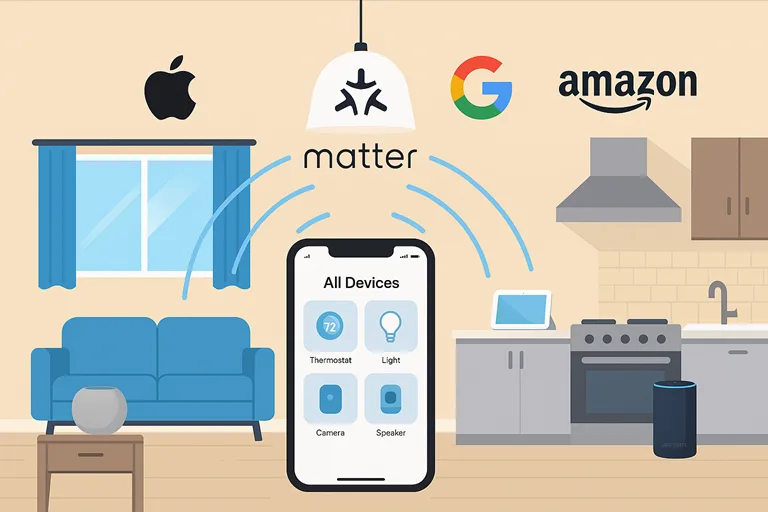
The idea of a fully connected smart home has excited people for a long time, where devices from different companies work together easily. In the past, picking between Apple HomeKit, Google Home, or Amazon Alexa meant creating separate systems, using many apps, or missing out on some smart features.
The Matter protocol is changing things now, which is supported by the Connectivity Standards Alliance (CSA). Matter is trying to make it easier for smart devices to communicate with each other, even though it has support from all three major tech companies. This could lead to better connected home systems experience, easier device setups, and more efficient smart home features.
In this blog, we’ll unpack how these ecosystems leverage Matter, compare their strengths, spotlight actionable steps for users, and fill critical content gaps by addressing what major competitors overlook: the real-world challenges and practical how-tos of achieving true smart home interoperability in 2025 and beyond.
- What is Matter? The Backbone of Smart Home Interoperability
- How Apple HomeKit, Google Home, and Amazon Alexa Drive the Matter Revolution
- Step-by-Step Guide: Creating a Unified Smart Home with Matter
- Real-World Examples: Matter in Action
- Advanced Actionable Tips for a Future-Ready Smart Home
- FAQ: Matter and the Smart Home Ecosystem
- Conclusion: The Future of Smart Homes is Here—Take the Next Step
What is Matter? The Backbone of Smart Home Interoperability
Matter is an application layer protocol developed and maintained by the Connectivity Standards Alliance (CSA). Announced in 2019 (originally as CHIP), Matter is designed to enable reliable, secure, and straightforward device interoperability across smart home brands.
- Core Benefits:
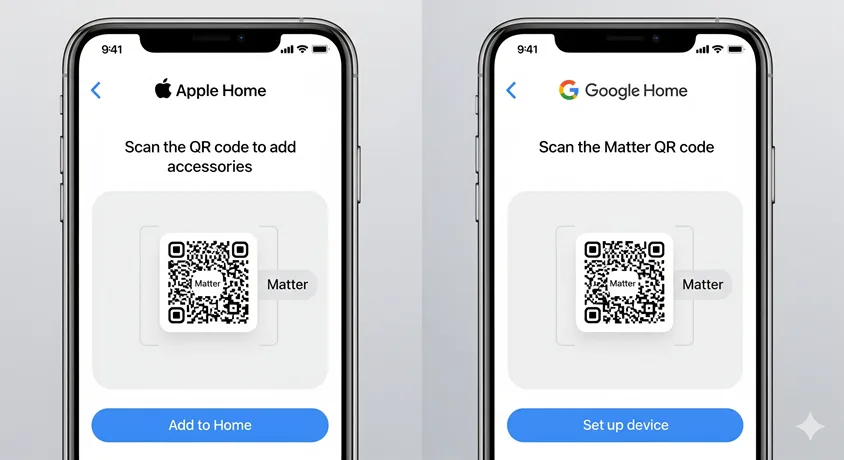
- Unified setup: Onboard new devices with a QR code, add them to multiple platforms, and control them via any major ecosystem.
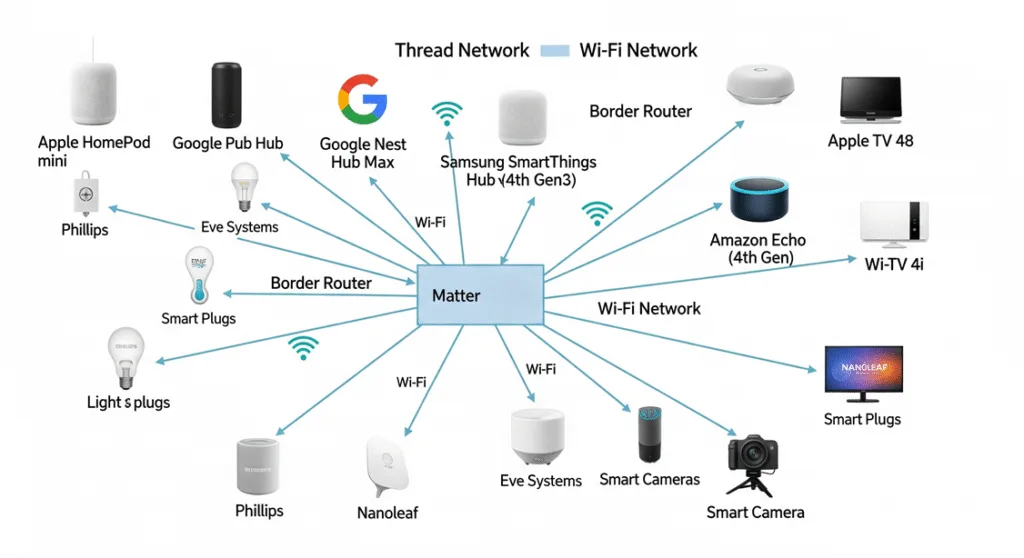
- Local control: Matter leverages both Wi-Fi and the low-power mesh network Thread for speedy local automation, reducing reliance on the cloud and increasing reliability.
- Growing support: Leading tech companies—Apple, Google, Amazon, Samsung—actively back the protocol, extending its reach.
Matter specifications updated semi-annually, with v1.4.2 as of Aug 2025. Updates continually expand supported device classes and improve admin/control features (such as Multi-Admin for cross-ecosystem control).
Key Technologies:
- Thread: Low-latency mesh networking for smart home devices—a staple for battery-powered and always-on gadgets.
- Wi-Fi: Used by high-bandwidth or stationary devices.
- Multi-Admin: Let’s devices be controlled from more than one ecosystem simultaneously.
- Matter QR Code: A simple, secure pairing mechanism built into new smart devices.
How Apple HomeKit, Google Home, and Amazon Alexa Drive the Matter Revolution
Apple HomeKit: Privacy-First and Deep iOS Integration
Apple HomeKit’s primary appeal lies in privacy, security, and a frictionless iOS ecosystem. Since iOS 16.1, Apple devices natively support Matter, with HomePod, Apple TV, and iPads acting as Matter controllers or Thread border routers15.
- Strengths:
- Industry-leading on-device security and end-to-end encrypted automation.
- Consistent, accessible interface via the Home app, Siri, and widgets.
- Enhanced automation via Shortcuts, time/location triggers, and adaptive scenes.
- Close integration with Matter means easier onboarding for new devices—scan a QR code, add to the Home app, and (unlike before) use many non-Apple accessories without third-party bridges.
- Limitations:
- Device selection, while growing, still lags behind Alexa or Google Home for niche accessories.
- Advanced accessory features (for instance, colour effects or manufacturer extras) sometimes require the vendor’s own app.
- Exclusivity: Most integrations are seamless only inside the Apple ecosystem, though Matter and select bridges are changing this rapidly.
Google Home: AI-Powered Automation and Hub Flexibility
Google Home builds on the search giant’s data prowess, offering Google Assistant’s voice intelligence, rich automation, and integration with Google services like Calendar and Maps.
- Strengths:
- User-friendly device setup and intuitive, visual scene/routine builders.
- Wide compatibility for both Wi-Fi and Thread-based Matter devices.
- AI routines and proactive home suggestions—Google will propose automations based on detected usage.
- Multi-Admin and Matter support allow cross-ecosystem device onboarding: you can add a light via Google Home, then control it with Siri or Alexa too.
- Limitations:
- Some advanced features or device types may lag behind Alexa or require Google’s own Takeout/data sharing.
- Smart home privacy and cloud data collection can be a concern, though Google offers more privacy controls now than in prior years.
Amazon Alexa: Flexibility and Third-Party Device Dominance
Amazon Alexa is the most flexible of the three, with a vast catalogue of compatible smart devices—over 100,000 as of 2025—and support for custom Alexa Skills and personalized routines.
- Strengths:
- Largest device and “skill” ecosystem. Nearly every smart home gadget on the market supports Alexa.
- Strong third-party developer community, rapid device onboarding, and routine support.
- Alexa Echos and compatible Eero routers now operate as Matter controllers and Thread border routers, unifying formerly separate device networks.
- Limitations:
- Privacy: Amazon’s data collection history may deter some users.
- Advanced Matter support for bridging devices and advanced automations is less mature than Google or Apple—e.g., limited support for >50 bridged devices, occasional status delay bugs.
- Alexa routines are powerful but sometimes require extra effort to cross ecosystems.
Key Takeaway: As Matter adoption expands, barriers between ecosystems are finally beginning to dissolve. Savvy users can now assemble a smart home with the best device for their needs—not just the one that “works with” their chosen platform.
| Feature | Apple HomeKit | Google Home | Amazon Alexa |
|---|---|---|---|
| Matter Support | Yes (iOS 16+, HomePod) | Yes (Android 8.1+, Nest) | Yes (Echo 4th gen+) |
| Voice Assistant | Siri | Google Assistant | Alexa |
| Device Compatibility | Apple-certified only | Broad (Nest + 3rd-party) | Very broad (100K+ devices) |
| Privacy & Security | Strong, local processing | Cloud-reliant | Mixed, mostly cloud-based |
| Mobile App | Apple Home (iOS only) | Google Home (iOS/Android) | Alexa App (iOS/Android) |
| Automation Routines | Advanced, limited triggers | Flexible and visual | Highly customizable |
| Multi-Admin Support | Yes | Yes | Yes |
| Voice Recognition | Yes | Yes | Yes |
| Offline Control | Partial (via Thread) | Limited | Limited |
| Smart Display Integration | No | Yes (Nest Hub) | Yes (Echo Show) |
| Music & Media Integration | Apple Music, AirPlay | YouTube Music, Spotify | Amazon Music, Spotify |
| Shopping Integration | No | Limited | Yes (Amazon shopping) |
| Custom Wake Word | No | No | Yes |
Step-by-Step Guide: Creating a Unified Smart Home with Matter
1. Assess Ecosystem Controllers and Hubs
- Apple HomeKit: Requires an Apple TV (4th gen+), HomePod (mini or 2023+), or an iPad (set as a home hub as a fallback).
- Google Home: Compatible Google Nest Hub, Nest Mini, or similar; must be running the latest Google Home app.
- Amazon Alexa: Newer Echo devices and Eero routers with Thread/Matter support. Ensure your controllers are updated to the latest software.
2. Buy Matter-Certified Devices
- Choose devices displaying the official Matter logo (bulbs, switches, plugs, sensors, locks).
- Examples: Eve Motion Sensor, Nanoleaf bulbs, Philips Hue (with updated bridge), Wemo smart plugs.
3. Set Up Your Devices
- Plug in or power the new accessory.
- Use any supported app (Home, Alexa, or Google Home) to scan the Matter QR code.
- Walk through the onboarding—devices should appear in all compatible apps if you enable “Multi-Admin.”
4. Sync Devices Across Ecosystems with Multi-Admin
- After onboarding, open a second controller (e.g., Home app on iPhone, then Google Home app).
- Add the same device by scanning its Matter QR code again, or by sharing an onboarding code from the initial app.
- The device will appear in both (or all three) ecosystems.
5. Create Automations and Routines
- Use HomeKit or Google Assistant to assign scenes or routines (e.g., motion turns on lights, voice-activated locks).
- On Alexa, design custom routines, such as “Movie Night” (dims lights, closes blinds, turns on TV).
- Set advanced schedule triggers, location automations, or AI-suggested routines (Google).
6. Maintain and Troubleshoot
- Update device firmware via manufacturer apps as required.
- If automations fail, try repairing Matter pairing or updating controller software.
- For older devices that aren’t part of the Matter system, you can use tools like Homebridge or SmartThings to link them with your Matter setup.
Pro Tips:
- Check if the device has “Thread” support, especially if it’s battery-powered or relies on a mesh network, to make sure your network stays strong and can grow.
- Make sure to back up your regular settings and automation routines often by using exports from your ecosystem or taking screenshots.
Real-World Examples: Matter in Action
Example 1: Hybrid Home Lighting
- A Matter-enabled Nanoleaf strip light is added using Apple HomeKit and later synchronized with Google Home via the QR code.
- User controls the same light with either Siri or Google Assistant. Schedules are set to dim at sunset, and a motion sensor (also Matter) is assigned to trigger on entry.
Example 2: Voice-Agnostic Security
- A smart lock (e.g., SwitchBot with Matter support) is set up via the Alexa app, then added to HomeKit.
- A routine allows family members to unlock the door with “Hey Google, unlock the front door” or with their Apple Watch via Siri.
Example 3: Stepwise Cross-Platform Routine
- An Eve motion sensor is integrated with Apple Home, then its QR code is scanned in Alexa and Google Home.
- When triggered, it can turn on Hue lights (using Google Home routines) or send voice notifications to HomePod and Echo speakers alike.
Advanced Actionable Tips for a Future-Ready Smart Home
- Always verify device firmware is Matter-compliant. Many manufacturers roll out Matter updates in phases—check support documentation before purchase.
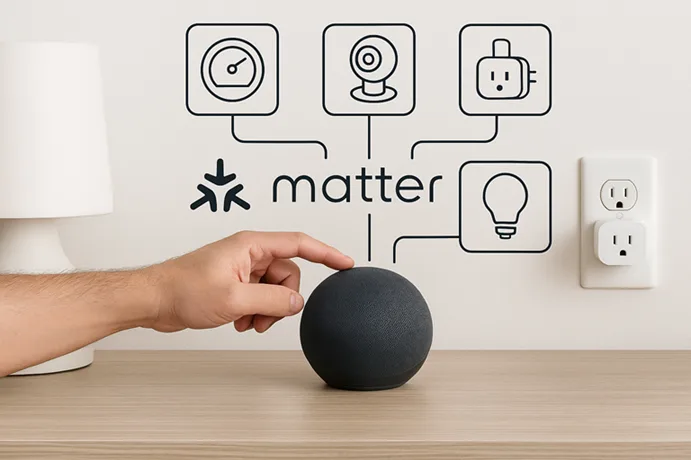
- Invest in Thread border routers for the best in-mesh performance. Devices like HomePod mini, Nest Hubs, or Eero routers can double as both controller and Thread router, eliminating dead zones.
- Document your onboarding QR codes (take a photo) for easy device re-adding or sharing between platforms later.
- Explore Homebridge or SmartThings as an interim bridge for Zigbee, Z-Wave, or legacy Wi-Fi devices lacking direct Matter support.
- Regularly delete unused automations and scenes. This keeps all ecosystems in sync and avoids conflict.
FAQ: Matter and the Smart Home Ecosystem
Q1: What is the primary advantage of Matter for smart home users? A: It enables true cross-ecosystem compatibility, allowing devices to be controlled from Apple HomeKit, Google Home, or Alexa, breaking down “walled garden” barriers. Setup is simpler, and local control (especially via Thread) is faster and more reliable.
Q2: Can I use devices from one brand with a different voice assistant? A: Yes—if the device is Matter-certified, you can onboard and control it from any major platform, regardless of manufacturer.
Q3: Is Thread required for Matter devices? A: Not always. Matter works over both Wi-Fi (for high-bandwidth devices) and Thread (for low-power, mesh-capable gadgets). Some devices support both, but using Thread offers better battery life and reliability for many device types.
Q4: Are existing non-Matter smart home devices obsolete? A: No. Many can be upgraded via firmware or connected via bridges (e.g., Hue Bridge, Homebridge, or SmartThings) to participate in your Matter ecosystem.
Q5: What are the main limitations of Matter right now? A: Advanced device features—like unique lighting effects or proprietary routines—may only be accessible through the manufacturer’s app. Also, not all device categories are covered (e.g., security cameras and appliances are catching up).
Conclusion: The Future of Smart Homes is Here—Take the Next Step
The slow, fragmented progress in home automation is finally giving way to a genuinely unified experience thanks to Matter and the collaboration of Apple, Google, Amazon, and the wider CSA ecosystem. In 2025, homeowners can confidently select devices that best fit their needs—without worrying about app lock-in, missed routines, or proprietary incompatibilities.
Whether you’re a lifelong Apple user, a Google loyalist, or an Alexa devotee, the future is in easily combining the best features of each—all thanks to Matter, Thread, and the relentless march towards smart home interoperability.
Now is the perfect time to future-proof your home. Pick devices that are certified by Matter, test out different platforms on your own, and say goodbye to the problems caused by separate systems. Are you ready to create a smooth, smart home experience? Look for Matter support on your preferred devices, use our practical advice and routines, and sign up for our newsletter to get updated guides, automation ideas, and real examples from others.
Explore, automate, and enjoy the freedom of a truly connected smart home—powered by Matter and the world’s leading ecosystems!