
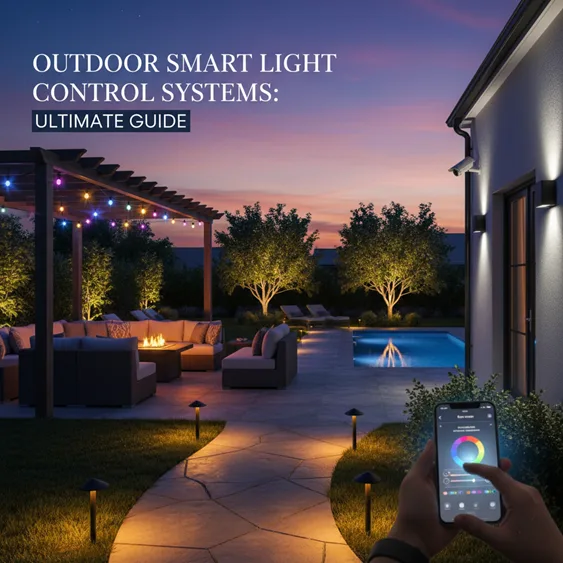
Let’s face it, we’ve all been there. You pull into your driveway after a long day, fumbling for keys in the dark, or worse, navigating a shadowy path with bags in tow. Or maybe you’re hosting an epic backyard BBQ, and someone inevitably has to dash inside to flip a switch, killing the vibe. What if I told you there’s a smarter way? A way to banish those dark corners, create stunning curb appeal, and even deter would-be mischief-makers, all from the palm of your hand? Welcome to the brilliant world of outdoor smart light control systems.
This isn’t just about flipping a switch with your phone – though that’s pretty cool, too. We’re talking about a complete paradigm shift in how you interact with your home’s exterior. Imagine your lights greeting you as you arrive, automatically dimming for a cozy evening, or flashing a warning if uninvited guests get too close. Sounds like science fiction? Nope, it’s readily available tech that’s transforming homes from drab to fab, safe to sensational.
Whether you’re a seasoned smart home wizard, a weekend warrior DIYer, or just dipping your toes into the exciting waters of home automation, this guide is your personal torchbearer. We’re going to illuminate everything you need to know about outdoor smart light control systems, from the “what” and “why” to the “how-to” and “which one.” So, grab a coffee (or a cold brew, if you’re feeling it), settle in, and let’s light up your life – literally.
- Why Outdoor Smart Lighting Control Systems are Important?
- Anatomy of an Outdoor Smart Light Control System: What Are We Working With?
- Planning Your Outdoor Smart Lighting Oasis: Where Do We Start?
- Installation Insights: DIY or Call a Pro?
- Top Contenders in the Smart Outdoor Lighting Arena
- Beyond the Basics: Advanced Smart Lighting Scenarios
- Troubleshooting Common Smart Outdoor Lighting Hiccups
- FAQs: Your Burning Questions Answered!
- Conclusion
Why Outdoor Smart Lighting Control Systems are Important?
Alright, let’s cut to the chase. Why bother upgrading your perfectly functional (if a bit… dumb) outdoor lights? The answer, my friends, is multifaceted, much like a perfectly cut diamond refracting light. It’s not just about convenience; it’s about security, aesthetics, energy efficiency, and pure, unadulterated cool factor.
Increase Home Security
Think of your outdoor lights as your home’s first line of defense. A well-lit exterior is a proven deterrent for intruders. They prefer the shadows, you see. But traditional lights are, well, predictable. Smart systems? They’re dynamic.
- Motion-Activated Magic: Imagine a light that only comes on when it detects movement. No more wasting energy lighting an empty yard all night. But here’s the kicker: with a smart system, you can adjust sensitivity, set schedules, and even get notifications on your phone. If something bigger than a squirrel triggers that floodlight at 2 AM, you’ll know.
- “Occupied” Look (Even When You’re Not): Going on vacation? Schedule your exterior lights to turn on and off at random intervals, mimicking an occupied home. This clever little trick can make potential snoopers think twice. You can even tie it into your indoor smart lights for a fully convincing illusion.
- Integration with Security Systems: Many outdoor smart light control systems play nice with other smart home security devices, like cameras and door/window sensors. If a sensor trips, your floodlights can instantly blaze to life, illuminating the scene for your security cameras to capture crystal-clear footage. Talk about a powerful partnership!
Boosting Curb Appeal and Ambiance: From Drab to Dreamy
Let’s be honest, we all want our homes to look good. Outdoor lighting is the unsung hero of curb appeal that is transforming a house into a home, especially after the sunset. Smart lighting takes this to a whole new level.
- Dynamic Landscapes: Ever seen those stunning homes where the landscape lighting seems to dance? Path lights that subtly guide you, accent lights that highlight your prize-winning hydrangeas, or spotlights that make your architectural features pop? Smart control allows you to program these effects, change colors (hello, holiday cheer!), and adjust brightness with a tap.
- Mood Lighting, Al Fresco: Hosting a dinner party? Dim the patio lights to a warm, inviting glow. Kids playing in the yard? Brighten things up to ensure safety. Do you want to relax on the porch with a good book? Adjust the lighting exactly so. The choices are unlimited, and you have complete control over your outdoor ambiance. No more static, one size fits all illumination.
- Seasonal Sensations: Imagine effortlessly transforming your home for Halloween with eerie green and purple lights, or creating a festive wonderland for the holidays with twinkling reds and greens, all pre-programmed and easily activated. Smart outdoor lights make holiday decorating less of a chore and more of a creative endeavor.
Saving Energy (and Your Wallet): Smart Can Be Green!
This is where the practical side kicks in, folks. While the initial investment in outdoor smart light control systems might be a bit more than traditional options, the long-term energy savings can be substantial.
- Precision Scheduling: Why have your porch light blazing at noon? With smart controls, you can set precise schedules based on sunrise/sunset, specific times, or even astronomical clocks (yeah, seriously, it’s that cool). Lights only come on when you actually need them.
- Motion and Occupancy Sensors: We touched on this for security, but it’s a massive energy saver too. Lights only activate when someone is present, ensuring not a single watt is wasted illuminating a space.
- Dimming Capabilities: Many smart outdoor lights are dimmable. Running them at 50% brightness instead of 100% can significantly reduce energy consumption, extending the life of your bulbs and saving you money.
- LED Technology: Most outdoor smart light control systems utilize energy efficient LED technology. LEDs consume far less electricity and last exponentially longer than traditional incandescent bulbs, further boosting your savings.
The Convenience Factor: Your Finger is the Switch
Let’s not forget the sheer joy of convenience. In our increasingly connected world, why should your outdoor lights be an exception?
- Remote Control: Forgot to turn off the backyard lights? No worries, pull out your smartphone and switch them off from anywhere in the world. Coming home late? Turn them on before you even arrive. It’s truly liberating.
- Voice Commands: “Hey Google, turn on the patio lights.” “Alexa, dim the front path.” Hands full? Hosting a gathering? Your voice is now the ultimate control. (Pro tip: This feature alone is worth the price of admission.)
- Automation and Routines: This is where the magic really happens. Integrate your outside lighting into sophisticated schedules. Like this one: “When my garage door opens after sunset, turn on the driveway and porch lights.” Or try this: “At 10 PM, dim all backyard lights to 30%.” The possibilities for custom automation are limited only by your imagination.
Anatomy of an Outdoor Smart Light Control System: What Are We Working With?
Before you dive headfirst into buying, it’s good to understand the key components that make these systems tick. Think of it like understanding the parts of an engine before you buy a car.
Smart Bulbs, Fixtures, and Switches
These are the front-line soldiers of your outdoor smart light control system.
- Smart Bulbs: These are screw-in bulbs (often LED) that contain built-in smart technology (Wi-Fi, Bluetooth, or Zigbee/Z-Wave radios). They fit into your existing outdoor fixtures. Super easy upgrade for existing lights.
- Smart Fixtures: These are entire lighting units (e.g., path lights, floodlights, string lights) that come with integrated smart control. Often more robust and weather-resistant for outdoor use. Great for new installations or complete overhauls.
- Smart Switches/Dimmers: If you love your existing fixtures but want smart control, these replace your standard wall switches. They let you control “dumb” lights like they were smart, with scheduling, dimming, and remote access. Important: If they will be exposed to the outdoors or control outdoor-rated fixtures, make sure they are rated for outside use.
Connectivity Options: How Do They Talk?
This is crucial for understanding compatibility and performance.
- Wi-Fi: Many smart outdoor lights connect directly to your home’s Wi-Fi network. Pros: No extra hub needed. Cons: Can sometimes strain your Wi-Fi if you have many devices, and range can be an issue in larger yards.
- Bluetooth: Great for local control, typically for a single light or a small group within proximity to your phone. Not ideal for whole-yard systems or remote access without a bridge.
- Zigbee/Z-Wave: These are mesh networking protocols developed specifically for smart home devices. They require a specialized hub (which is occasionally integrated into a smart speaker or security system). Pros: Longer range (devices relay messages to one other), less load on Wi-Fi, and greater reliability for larger systems. Cons: Needs a hub.
- Proprietary RF: Some systems use their own radio frequency, often requiring a specific bridge or hub from that brand.
The Brains of the Operation: Hubs, Bridges, and Apps
Every smart system needs a central nervous system.
- Smart Hub/Bridge: This is frequently the primary coordinator for Zigbee/Z-Wave devices, converting their signals into something that your Wi-Fi network and smartphone can comprehend. Brands like Philips Hue (for their Hue Bridge) or SmartThings utilize these.
- Smartphone App: This is your command center! Almost every outdoor smart light control system has a dedicated app where you can set schedules, change colors, create scenes, and monitor your lights.
- Smart Home Ecosystems (Google Home, Amazon Alexa, Apple HomeKit): This is where everything comes together. Most smart outdoor lighting systems integrate seamlessly with these major platforms, allowing for voice control and unified automation with your other smart devices.
Planning Your Outdoor Smart Lighting Oasis: Where Do We Start?
Before you click “add to cart,” a little planning goes a long way. Trust me, nobody wants to be troubleshooting connectivity issues when they should be enjoying their perfectly lit patio.
Assessing Your Needs: What Do You Want to Achieve?
- Security First? Focus on motion-sensing floodlights, strategic path lighting, and robust integration with security cameras.
- Ambiance King/Queen? Think about dimmable string lights, color-changing spotlights, and accent lighting for landscaping.
- Energy Efficiency Guru? Prioritize scheduling capabilities, motion sensors, and bright, long-lasting LED options.
- A Bit of Everything? Most systems can handle a blend, but it helps to prioritize your main goals.
Mapping Out Your Exterior: The Grand Design
Grab a pen and paper (or your favorite digital drawing tool) and sketch out your outdoor space.
- High-Traffic Areas: Driveways, walkways, entryways – these need reliable, often brighter, illumination for safety and security.
- Feature Lighting: Trees, architectural details, garden beds – these are prime candidates for accent lighting to create visual interest.
- Recreational Zones: Patios, decks, outdoor kitchens – these benefit from flexible, dimmable lighting for various activities.
- Power Access: This is a big one! Where do you have existing outdoor outlets? Will you need to run new low-voltage wiring for path lights? Think about the practicality of getting power to your desired light locations. Always consult with a qualified electrician for any new high-voltage wiring.
Connectivity Check: Signal Strength is Key!
Your smart lights are only as smart as their connection.
- Wi-Fi Coverage: Walk your yard with your phone and check your Wi-Fi signal strength in the areas you plan to install lights. If it’s spotty, consider a mesh Wi-Fi system or a Wi-Fi extender.
- Hub Placement: If you’re using a Zigbee/Z-Wave system, place your hub centrally to maximize its reach.
- Outdoor Rating: Crucially, any smart switch, plug, or fixture installed outdoors must be rated for outdoor use (e.g., IP65, IP67 weatherproof ratings). This is non-negotiable for safety and longevity. Water and electronics do not mix, folks!
Installation Insights: DIY or Call a Pro?
This really depends on your comfort level and the complexity of your chosen system.
The DIYer’s Delight (Mostly Low-Voltage)
Many outdoor smart light control systems are designed with the DIYer in mind, especially low-voltage landscape lighting.
- Plug-and-Play Smart Bulbs/Plugs: If you’re replacing existing bulbs with smart ones or using smart outdoor plugs for string lights, it’s typically as easy as screwing in a bulb or plugging in a device.
- Low-Voltage Landscape Lighting Kits: These often come with transformers that plug into a standard outdoor outlet, and the lights connect via low-voltage wiring that can be safely buried a few inches deep. Many smart versions exist with app control.
- Smart Switches (Replacing Existing Ones): If you’re comfortable with basic electrical work (turning off the breaker, understanding wiring diagrams), replacing a standard light switch with a smart one can be a DIY project. When in doubt, always consult an electrician.
When to Ring a Professional (High-Voltage & New Runs)
For more complex installations, a pro is your best friend.
- New High-Voltage Wiring: If you need to add new outlets or run new high-voltage lines for permanent fixtures, an electrician is non-negotiable. Safety first, always!
- Complex Landscape Design: If you have a sprawling yard with intricate lighting zones, a professional landscaper or lighting designer can help you create a stunning, cohesive look.
- Integration Challenges: If you’re having trouble getting disparate smart home devices to play nicely, a smart home integrator can troubleshoot and optimize your system.
Top Contenders in the Smart Outdoor Lighting Arena
The market is awash with fantastic options. Here are a few prominent players and what they’re generally known for:
- Philips Hue: Often considered the gold standard for smart lighting. Fantastic color capabilities, robust ecosystem, and great integration. Requires a Hue Bridge. Offers a wide range of outdoor fixtures, bulbs, and light strips.
- Ring Smart Lighting: Integrates seamlessly with Ring doorbells and cameras. Focuses heavily on security, offering motion-activated floodlights, path lights, and step lights. Often Wi-Fi or Ring Bridge-based.
- Lutron Caseta: While primarily known for indoor dimmers, their outdoor smart plug is a powerhouse for controlling string lights or other plug-in fixtures. Super reliable, clear connect RF technology and integrates with major smart home platforms.
- Wiz Connected (by Philips): A more budget-friendly alternative to Philips Hue, offering Wi-Fi smart bulbs and some outdoor options without needing a separate bridge. Great for simpler setups.
- Govee: Known for vibrant, often elaborate, RGBIC (individually addressable LED chips) outdoor strip lights and floodlights. Perfect for creating dramatic, colorful effects. Wi-Fi/Bluetooth controlled.
- Outdoor-Rated Smart Plugs (e.g., TP-Link Kasa, Meross): These are excellent entry points. Plug in your existing string lights, patio lighting, or inflatable decorations for instant smart control over Wi-Fi. A low-cost but high-impact improvement!
Beyond the Basics: Advanced Smart Lighting Scenarios
Once you’ve got the hang of the basics, the real fun begins.
- Geo-Fencing: Your lights turn on/off automatically when your phone enters/leaves a specific geographic area around your home. Welcome home, indeed!
- Weather Integration: Imagine your porch lights subtly changing color to warn you of an incoming storm, or turning on brighter if it’s exceptionally foggy.
- Event Triggers: Link your outdoor lights to your smart doorbell. When someone rings, your porch light could flash three times to alert you visually, especially if you have a hearing impairment or are in a noisy part of the house.
- Holiday Light Extravaganzas: Pre-program elaborate light shows for Halloween, Christmas, or even the Fourth of July, all controlled from your app. Be the envy of the neighborhood!
- “Party Mode” Scenes: One tap transforms your backyard into a party zone with bright, colorful lights and perhaps even integrates with smart outdoor speakers for music.
Troubleshooting Common Smart Outdoor Lighting Hiccups
Even the best systems can have a hiccup or two. Don’t fret, most issues are easily resolved.
- Connectivity Drop-Outs: Often due to a weak Wi-Fi signal. Try moving your router, adding a Wi-Fi extender, or upgrading to a mesh Wi-Fi system. For Zigbee/Z-Wave, ensure your hub is centrally located and you have enough repeater devices (like smart plugs) to extend the mesh network.
- Lights Not Responding: First, check the power. Is the breaker on? Is the fixture plugged in? If it’s a smart bulb, try power cycling the fixture (turn it off and on at the switch). Sometimes a simple reset in the app can also do the trick.
- Motion Sensor False Alarms: Adjust the sensitivity settings in your app. Trees swaying in the wind, small animals, or even passing cars can sometimes trigger sensors if they’re too sensitive. Repositioning the sensor can also help.
- Inconsistent Schedules: Double-check your app’s schedule settings. Ensure you’ve set the correct time zone and that the “sunrise/sunset” settings are calibrated correctly if you’re using them. Also, check if any other routines or automations are conflicting.
FAQs: Your Burning Questions Answered!
Are outdoor smart light control systems difficult to install for a DIYer?
Many outdoor smart light control systems are surprisingly simple to install, especially plug-and-play smart bulbs, smart plugs, and low-voltage landscape lighting kits. Replacing existing switches with smart ones is also a do-it-yourself project for those with basic electrical knowledge. When installing new high-voltage wire, it is usually best to use a professional electrician.
Do I need a smart home hub for outdoor smart lights?
It depends on the system. Wi-Fi-enabled smart lights frequently do not require a separate hub and can connect directly to your home’s Wi-Fi. However, systems that employ the Zigbee or Z-Wave protocols (such as Philips Hue) require a separate hub or bridge to operate. Before making a purchase, review the product specifications.
Are outdoor smart lights truly weatherproof?
Yes, respectable outdoor smart light control systems are intended and rated for outside use. Look for IP (Ingress Protection) ratings, such as IP65 or IP67, which indicate dust and water resistance. Always check that any smart device placed outdoors has the proper weatherproofing grade.
Can outdoor smart lights be controlled with voice commands?
Yes, Most of the outdoor smart light control systems interact with popular voice assistants such as Amazon Alexa, Google Home Assistant, and Apple HomeKit. This allows you to control your lights with simple voice commands adding a new level of ease to your smart home setup.
Can I integrate outdoor smart lights with my existing security system?
Many outdoor smart light control systems can be integrated with smart home security systems. This allows for powerful automations, such as having your floodlights automatically activate and illuminate an area if a security camera detects motion or a door/window sensor is triggered.
Are outdoor smart light control systems energy efficient?
Definitely! The great majority of outdoor smart light control systems rely on energy-efficient LED technology. When combined with smart features such as precise scheduling, motion detection, and dimming capabilities, they considerably lower energy usage compared to standard outdoor lights, saving you money in the long term.
Conclusion
So there you have it. Outdoor smart light control systems provide a genuinely transforming experience for your home outdoor, from eliminating dark corners to throwing the most epic backyard bashes. They are more than simply gadgets; they are investments in safety, curb attractiveness, convenience, and energy efficiency.
We’ve covered everything, from the compelling why to the intricate how-to, so you can make informed judgments. You are not simply purchasing lights; you are investing in an intelligent ecosystem that works relentlessly to make your outdoor space safer, more beautiful, and much more pleasurable.
The future of home lighting isn’t just bright; it’s brilliantly smart. Don’t let your outdoor space stay in the dark. It is time to control, upgrade your home, and reveal in the radiance of a really smart exterior.
Are you ready to illuminate your world? Explore the options, select the system that best suits your lifestyle, and enter the bright future of outdoor living. Your smarter, more secure, and visually appealing home is waiting for you!