
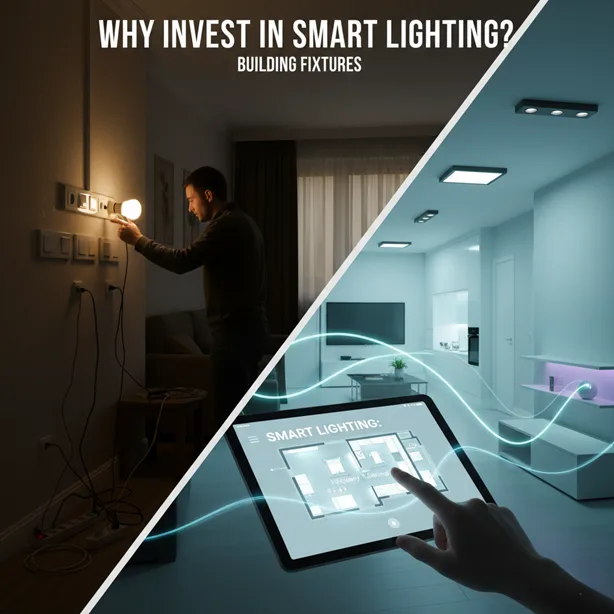
Let’s be honest. For the longest time, your average wall switch was a relic of a bygone era. You walk in, you hit the clunky plastic button, a basic bulb flips on, and that’s it. Rinse. Repeat. It felt like the lighting in your ultra-modern, voice-controlled home was stuck in, well, the dark ages. It’s a good setup for an apartment in the 1990s, not for a forward-thinking, tech-savvy smart home owner in this decade.
This is exactly why the decision to embrace smarter illumination needs a massive reality check. We’re past the gimmick phase—the one where changing the bulb to an electric-bill-spiking shade of purple was the only real ‘smart’ party trick. Today, an integrated smart lighting system isn’t just about an RGB novelty or some complicated wiring nightmare for a DIYer; it is, quite simply, the bedrock of modern domestic intelligence.
Listen, building smart lighting fixtures and entire integrated systems has leaped over the “nice-to-have” chasm straight into the “must-have” category for renters, homeowners, and tech enthusiasts alike. This isn’t a small side project; it’s the single most underrated upgrade a homeowner, renter, or DIYer can make right now. Think about it: a system that automatically boosts your well-being, slashes your power bill, actively works as a home security guard, and changes the entire vibe of your space with one simple command. The foundational reality is this: investing in building smart lighting fixtures is the smartest move you can make for your home’s value and, frankly, your own sanity.
The world of interconnected living demands systems that communicate seamlessly, from your thermostat to your robotic vacuum. Your lighting, as the most widespread utility in your entire home, should be no exception.
- Why Would Investing in Building Smart Lighting Fixtures Help Us: Cost Efficiency
- Convenience, Automation, and Lifestyle
- Turbocharge Your Home Security and Peace of Mind
- The Science of Feeling Better: Human-Centric and Wellness Lighting
- A DIYer's Roadmap to Smart Lighting Fixtures
- Debunking Smart Lighting Myths
- FAQ s
- Conclusion
Why Would Investing in Building Smart Lighting Fixtures Help Us: Cost Efficiency
Look, everyone loves new tech. That little voice-control “Woah, cool!” moment? Gold. But you and I are tech-savvy people. We care about more than party tricks; we care about the cold, hard, green return on investment, or ROI. That initial sticker shock of a whole-home system can give anyone pause, but once you drill down, the long-term financial benefits make an undeniable case for smart lighting. You are, in effect, trading a short-term cost for a long-term, compounding profit.
Energy Efficiency and Cost Reduction
We need to get to the real money-saver first: energy. Smart lighting isn’t smart if it’s an energy consumption vampire. Luckily, modern smart lighting solutions use energy-efficient LED technology. Switching from old-school incandescents to basic LEDs already gives you a fantastic head start, but coupling them with intelligent control is where the serious magic—and cash savings—happens.
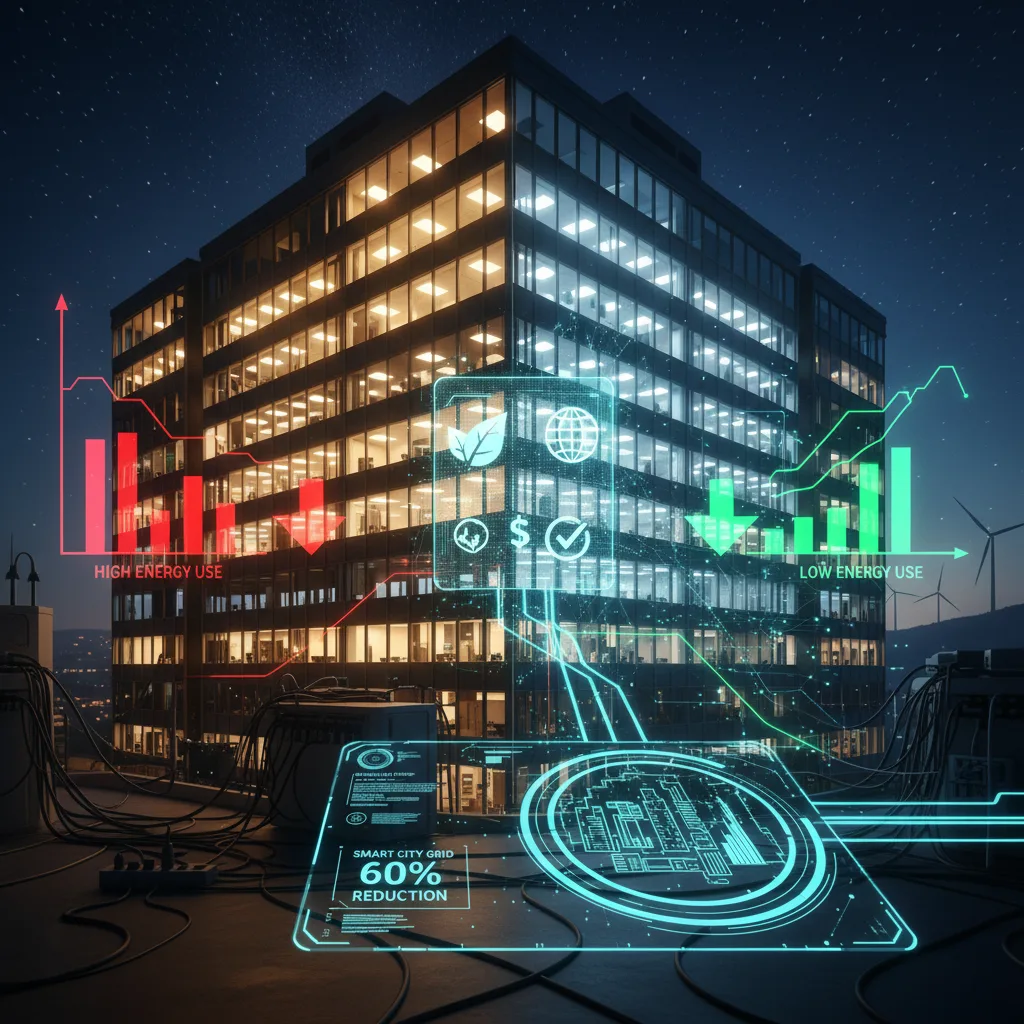
Ready for a truly eye-watering stat? Advanced, integrated smart lighting systems have been proven to slash overall lighting costs by a whopping 35% to 70% in residential settings. Yes, you read that right: seventy percent. Think of those savings added up month after month on your utility bills. That’s a chunk of change you can redirect to something way more fun, like, you know, more smart home gear. It’s the perfect feedback loop for a smart home enthusiast.
How do we hit that upper-echelon number? It’s two-fold:
- Lower Base Consumption: Smart LED bulbs are fundamentally engineered for efficiency, drawing minuscule wattage compared to their older counterparts.
- Zero Wasted Power: This is the smart part. Your system knows to dim when ambient natural light is sufficient (Daylight Harvesting), knows to turn off when a room has been vacant for ten minutes (Occupancy Sensors), and knows the difference between daytime-on and a full-brightness midnight surge. This active, granular, intelligent control is why your monthly bills start singing a lighter, friendlier tune.
Then there is the sheer longevity factor. Who among us hasn’t sworn at a burned-out bulb in an annoying-to-reach high ceiling fixture? Incandescent bulbs often only manage around 1,200 hours, whereas an equivalent smart LED bulb can boast a phenomenal lifespan of up to 25,000 hours, or even more. This extended LED lifespan isn’t just an arbitrary number; it’s practically a maintenance-free solution for nearly a decade of regular use, which means less money spent on replacement bulbs and zero frustration. You stop being a constant ‘bulb-swapper,’ freeing up your weekend for, well, anything else!
Automatic Accountability: Never Power a Vacant Room Again
“Did I turn off the hall light?”
It’s the question that nags at you when you’re already in bed, half-asleep, or three miles into your morning commute. We’re only human; we forget things. And in the world of traditional lighting, human forgetfulness is synonymous with wasted energy. The light left blazing in the closet for eight hours is literally costing you money to illuminate nothing. Zero people. Zero dust bunnies.
Smart lighting turns occupancy sensors and programmed passive infrared (PIR) detection into a form of automatic accountability. If the motion sensor on a hallway fixture detects movement at 7:00 PM, the light turns on. Great. But if the same motion sensor detects no movement for five, ten, or fifteen minutes? Snip. Power-off. That’s a direct and instant saving for every forgotten light in your home, which is where the vast bulk of the long-term savings accumulates. It is, to borrow an idiom, a penny saved is a penny earned through high-tech convenience.
For the renters out there, especially those who can’t or don’t want to rewire walls, this is an immediate game-changer. Starting with simple plug-and-play smart bulbs is low-commitment but offers permanent energy-saving intelligence from day one. You’re not replacing an entire smart fixture; you’re just swapping out a basic bulb for a smarter one, and boom, you get instantaneous remote control and occupancy sensing for your personal portion of the utility bill. It just makes financial sense, full stop.
Convenience, Automation, and Lifestyle
The convenience factor of smart lighting is what most people notice first—and it’s easy to dismiss as pure indulgence. But once you have truly lived with a sophisticated system, you realize it’s less about a minor indulgence and more about a major, stress-reducing streamlining of your daily existence. It’s what frees up little slices of your brainpower so you can focus on more important stuff.
Seamless Integration with Your Digital Ecosystem
For anyone reading this, your home is likely already anchored by a digital ecosystem—be it a siren call of, “Alexa, kill the lights!”, a command sent to Google Home, or an Apple HomeKit routine that greets you.
Smart lighting fixtures are engineered to speak the language of your digital home with fluency. This powerful voice control means the simple act of “lighting a room” or even “creating a whole new vibe” transforms from a walk-and-flip process into a spoken command or a simple tap on your phone or smart home control panel. Coming home with a load of groceries? “Hey Siri, I’m home.” The system hears you, disarms the alarm, adjusts the thermostat, and flips on your preferred welcoming lighting scenes—the path is illuminated from garage to kitchen. Now that’s what I call a seamless welcome mat!
The simplicity of programming a macro or scene to control a dozen devices with one command is incredibly liberating. It eliminates the digital friction of interacting with multiple devices for a single lifestyle shift.
Punchy Note: Stop treating your lights like isolated entities. Your kitchen light needs to talk to your living room speaker.
For the smart home enthusiast always tinkering with their setup, smart lighting is a sandbox of interconnected possibilities. Want your overhead light to subtly dim to a soft green when the dishwasher finishes its cycle? Done. Want the bedroom lamp to turn red when a delivery driver is on your porch? Totally achievable. Compatibility is key, so whether you’re committed to a single ecosystem or prefer to knit different Smart Home Platforms together with a dedicated hub (a great topic for another deep-dive!), smart lighting provides the canvas.
Creating Scenes and Setting the Mood
Honestly, nothing sinks a room’s feel faster than a glaring, uniformly bright ceiling light. Standard lighting gives you one setting: ON. It’s basic, utilitarian, and utterly lacks personality.
The shift that investing in building smart lighting fixtures brings is one of total design fluidity—you become the Ambiance Arbitrator. Imagine moving past Standard White and finding your perfect illumination on a spectrum.
- Movie Night Dimness: Overhead pot lights fade to a subtle 10% brightness, while bias lighting behind the TV bathes the wall in a soothing indigo.
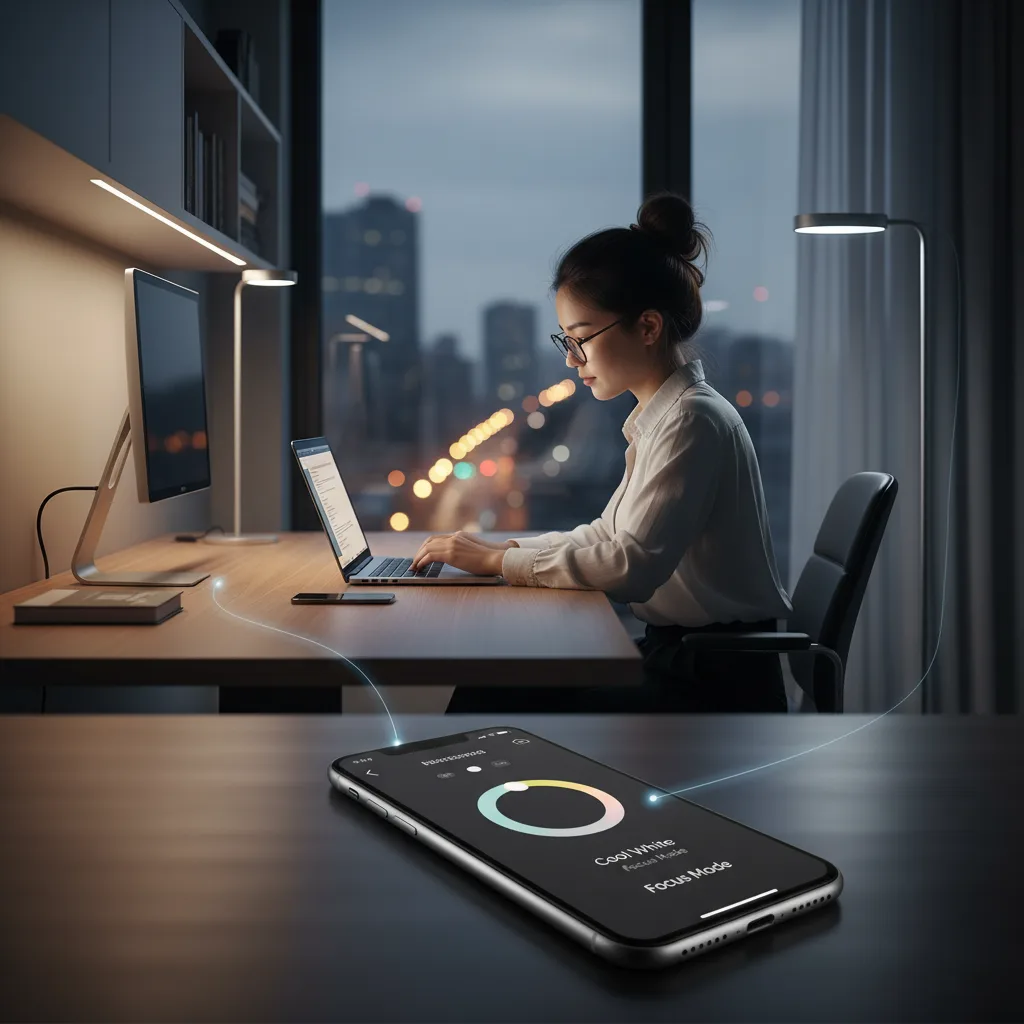
- Work-from-Home Focus: Your tunable white fixtures shift to a cooler, stimulating 4500K (Color Temperature Magic) and bump up to 80% intensity, promoting alertness.
- Cozy Evening Relax: Post-dinner, your living space changes from task-bright to a warm, inviting 2700K at a soft 35% dim, telling your brain, “It’s time to wind down.”
Customizing scenes gives you this level of granularity everywhere, banishing that one annoying corner of the room that always felt too bright or too harsh. You move from having mere “lights” to a true Home Lighting Design that serves your emotional and practical needs instantaneously. The simple ability to command a light’s specific brightness and color temperature (the warm or cool feeling of the light) is arguably the single greatest convenience factor, providing nuanced design often only available with extremely expensive professional lighting installations of the past. It’s what moves your house past “lighted” to “illuminated.”
Turbocharge Your Home Security and Peace of Mind
Here’s a bitter truth: A dark, quiet home is an open invitation for an opportunist. Most burglars want an easy target; a house that shouts “Nobody’s home!” is a magnet. Your lights, or lack thereof, are the first, and perhaps most effective, line of defense. But a dumb timer—that annoying box you bought that turns on your single porch light at 6 PM sharp—is child’s play for a semi-experienced snoop.
The Clever Illusion of Occupancy (A Burglar’s Worst Nightmare)
Smart lighting moves your security from predictable automation to true, randomized, convincing Illusion of Occupancy.
- Randomized Scheduling: Instead of turning your living room lamp on at the same time every day, the smart system is programmed with a “vacation mode.” It mimics real life. It’ll turn on the downstairs bathroom light for twenty minutes at 8:45 AM one day, then flick on the upstairs reading lamp from 9:07 PM to 10:15 PM the next. It varies in intensity and duration across different rooms, creating a far more realistic, and therefore deterring, human presence than any single timer can.
- Geo-Fencing and Remote Control: This is convenience meshed with security. Set a rule so that when your phone leaves a one-mile radius around your home (geo-fence), all the lights turn off. Simple. The reverse is true: when you drive back into the area, the welcoming front smart outdoor lighting flickers on before you even turn down your street. Better still, if you’re on a cruise ship three time zones away and you get a security alert from your camera, you can log in and remotely start flipping lights on and off to let any lingering person know you are actively watching.
Your lights have just been deputized as active security agents. They aren’t just illuminating; they’re safeguarding.
When Motion Sensors Turn into Security Guards
The next evolution of security systems integration is the real-time interaction between devices. When a standard motion sensor triggers a blinding, full-brightness response, the shock is an instantaneous deterrent.
Here’s the powerful sequence: Your exterior security camera detects a human-shaped object loitering near the garage door. The alarm is already sent to your phone, but simultaneously, the event triggers the integrated system to turn on the porch light, driveway spotlights, and the back floodlights all at a maximum intensity. The whole property is instantly flooded with light. A potential intruder has lost the cover of darkness, and their element of surprise is gone. That sudden illumination—the blinding light reaction—is often more than enough to send the unwanted visitor fleeing, often long before local authorities could even pull into the neighborhood.
Furthermore, an activated smart light enhances the utility of other smart home systems. Security camera video footage is infinitely clearer, more defined, and more usable to police when a crime is recorded in bright, uniform, activated light. Investing in building smart lighting fixtures means you aren’t just lighting your steps; you are dramatically improving your home’s comprehensive safety strategy. This is passive and active home defense woven into your house’s electrical skeleton.
The Science of Feeling Better: Human-Centric and Wellness Lighting
We need to shift gears for a minute, away from ROI and Security, toward personal ROI: your health. Did you know that the simple bulbs over your head can actively contribute to whether you feel energized or drowsy? The way you illuminate your world matters—a lot—and this is where smart lighting becomes deeply human.
Synchronizing Your Space with Your Circadian Rhythm
You know that feeling of being cooped up indoors all day? It’s not just a feeling; it’s a biological phenomenon linked directly to light. The main time-keeper for your body’s sleep-wake cycle—your circadian rhythm—is light itself. Exposure to different wavelengths (or color temperatures) of light throughout the day dictates when your body produces hormones like cortisol (alertness) and melatonin (sleepiness).
This is the power of Human-Centric Lighting (HCL), a cutting-edge smart fixture trend gaining serious momentum. An HCL system, which you can program or automate, uses its tunable white LED capabilities to literally mimic the sun’s natural cycle indoors.
- The Morning Kickstart: Around 8 AM to 10 AM, the lights transition to a bluish-white, or cooler temperature (upwards of 4500K to 6500K). This exposure tells your brain, “It’s time to be awake, focused, and alert,” helping to release the right hormones to tackle the day’s to-do list.
- The Evening Wind-Down: Conversely, in the two hours leading up to bedtime, the light gently slides toward warm yellows and ambers (down to 2700K) and lowers its intensity. This non-invasive light is key for natural melatonin production, signaling to your body that it’s time to prepare for a good, deep, and truly restorative night’s sleep.
By subtly changing your internal clock, a smart HCL setup helps support better mental health, enhances mood, and boosts concentration and overall productivity during active hours. It’s about having the right light at the right time. It’s lighting that doesn’t just brighten your room—it cares for you.
The Future is Adaptive: AI and Predictive Lighting
For the hardcore smart home enthusiast, the next phase of smart lighting is all about predictive power—the point where your lights stop being told what to do and start anticipating what you need. We’re talking about AI at a foundational level.
The current 2024/2025 trends point toward truly AI-powered adaptive lighting systems. This goes far beyond programmed scenes; the system is learning your subtle habits.
- Do you always grab a glass of water an hour after putting the kids to bed? The AI system learns this and subtly illuminates a safe pathway to the kitchen just for that twenty-minute window.
- Do you only need task lighting at your desk on days when your laptop camera is open for a meeting? It can start associating a specific digital trigger with a physical lighting scene and automatically deploy it.
Imagine walking into a room and a tiny sensor recognizes who you are based on your height or walking pattern, or a command is triggered by a simple hand gesture—gesture control is already a new player on the horizon. The future of smart lighting is one where the lights literally read your mind because they know your personal rhythms better than you do, adapting and optimizing for comfort and efficiency without any manual input. It is this deeply integrated, invisible technology that promises to define the next generation of our homes.
A DIYer’s Roadmap to Smart Lighting Fixtures
This all sounds amazing, right? But for the DIYer and the practical smart home owner, the thought of a “whole new lighting system” might conjure up images of a pricey electrician, tearing out drywall, and weeks of messy installations. Stop that train of thought right there! One of the greatest things about investing in smart lighting fixtures today is the staggering flexibility and ease of gradual adoption. You absolutely do not have to jump into the deep end on day one.
Bulb-Based vs. Switch-Based vs. Fixture: Which is Right for You?
The best way to start is first to understand the three main types of smart lighting solutions:
| Solution Type | Target Audience | Commitment Level | Pro/Con |
| Smart Bulbs (Plug-and-Play) | Renters, DIY Novices, Test Projects | Low – Just screw it in. | Pro: Renter-friendly, affordable starter. Con: Needs switch to stay ‘ON’ to work. |
| Smart Switches / Dimmers | Homeowners, Anyone Wanting a Traditional Look | Medium – Replaces wall switch. | Pro: Control over any bulb on the circuit; traditional feel. Con: Requires minor electrical work. |
| Dedicated Smart Fixtures | New Construction, Remodelers, Outdoor Lighting | High – Fully replaces existing light and housing. | Pro: Best for clean integration (recessed, light strips); best long-term security. Con: Most invasive and permanent. |
For a renter, the path is clear: start with the smart bulb starter pack. These are the cheapest, fastest entry points, and you unscrew the old bulb and screw in the new, smarter one. Done. The commitment level is the price of the bulb, and when you move, you take it with you.
For the smart home owner with an established layout, a smart switch is often the better path for areas with multiple lights, like a dining room chandelier or kitchen track lighting. Why replace five pricey bulbs when a single smart switch can make them all ‘smart’ in one go? This provides seamless whole-room control without replacing perfectly good existing bulbs.
Practical Installation and System Selection Tips
Starting your upgrade is surprisingly simple. For a typical, hub-free Wi-Fi smart bulb, here is the 3-step quick start installation:
- Screw it in: Replace your old bulb with the smart bulb in a normal fixture.
- Power On: Turn the physical switch ON and keep it on (this keeps the bulb ‘online’).
- App Setup: Download the bulb’s companion app and follow the prompts to connect the smart light bulb to your home Wi-Fi network.
That’s your entryway into the smart world! The trickier bits come when scaling the project. Don’t forget the router! Your system is only as reliable as your home network. You may need to invest in a mesh Wi-Fi network to ensure those exterior garage lights or basement switches have a robust and stable Wi-Fi connectivity signal, which is absolutely vital for reliability. After all, a “smart light” that acts dumb when you command it from another room is hardly an improvement.
Above all, Compatibility is King. Make sure your chosen product works with your preferred smart ecosystem. You don’t want a Google Home network struggling to communicate with an Apple HomeKit-exclusive brand of bulbs. Do your homework, but thankfully, most major brands today play well in multiple sandboxes.
Debunking Smart Lighting Myths
Before we wrap this up, let’s quickly extinguish some common fears and misconceptions that still keep a few great DIYers and renters on the sidelines.
The “It’s Too Complicated” Myth
The myth that smart lighting systems require an IT degree to operate is thankfully a remnant of the early days. Modern smart lighting manufacturers have spent huge amounts of energy on one thing: User-Friendly Simplicity. The companion apps are sleek, the voice control setup is almost instant, and the integration tutorials are genuinely step-by-step. While full Human-Centric Lighting with all the bells and whistles is certainly complex, you can start with a single, two-pack smart light bulb in your bedroom lamp and master that setup in literally three minutes. Start small. The convenience and simplicity ramp up much faster than the initial perceived complexity would suggest.
Addressing the “It’s Too Expensive to Start” Objection
Sure, a premium color-changing smart bulb might cost 10x what a traditional light bulb costs. That’s true. However, this argument ignores two key realities we covered: the rapid and undeniable ROI from energy savings (35-70% reduction in lighting costs), and the incredible lifespan of the fixture (lasting for up to 25,000 hours, or years, often removing a major maintenance expense). When amortized over their operational life and considering the cumulative utility savings, a smart LED system is not a cost—it is a positive capital investment.
The “What If the Internet is Down?” Solution
Ah, the apocalypse question! If the Wi-Fi or Internet connection is down, what happens to the smart lights? They sit on your walls—inert and unusable? Nope. The brilliant reality is that almost all smart lighting fixtures today are designed with a fallback mechanism: the old-fashioned wall switch! Flip the switch off and on again (sometimes quickly, sometimes once), and the smart lighting operates as a normal bulb, albeit at 100% brightness until the smart network is restored. Many smart switches look and function like their analog counterparts, only with an added intelligence module. So, in an outage, your light will still work; it just won’t be a smart one. Safety, first.
FAQ s
Q: Is it safe to install smart bulbs or switches myself?
A: Installing smart bulbs is incredibly safe—it’s just like changing a regular bulb! Smart switches are more involved, requiring basic electrical knowledge (wiring into a wall box). While many DIYers handle this with ease, always cut the power at the circuit breaker first. If in doubt about a smart switch, consulting an electrician is the smart and safe play.
Q: How long does it take for a smart lighting system to pay for itself?
A: For an average household, depending on local energy rates and initial investment costs, the ROI through utility and maintenance savings typically occurs within one to three years. Given their average lifespan is up to 25,000 hours (nearly 25 years with typical use), the financial gains are a compounding return long into the future.
Q: Do I need a central smart hub for my smart lights?
A: Not always. Many modern smart light fixtures use Wi-Fi or Bluetooth to connect directly to your router for control via a dedicated app or voice assistant (Alexa, Google Assistant). However, a dedicated smart hub (like Zigbee or Z-Wave bridges) can improve reliability, system speed, and support larger, more complex systems with different communication protocols.
Q: What’s the biggest benefit for renters who can’t change fixtures?
A: The biggest benefit is convenience, security, and portability! Renters should use smart bulbs, which install easily and don’t affect the fixture or wiring. They offer remote control, automation, scheduling, and the valuable illusion of occupancy for enhanced security—all of which are easily removed and taken to the next rental unit.
Q: How does Human-Centric Lighting improve my sleep?
Human-Centric Lighting (HCL) systems promote better sleep by adjusting the color temperature throughout the day. In the hours before bed, the system automatically shifts to warm, amber tones which encourage your body’s natural production of melatonin—the hormone necessary for inducing quality, restful sleep.
Q: Will a power outage mess up my lighting settings and automation rules?
A: Generally, no. While the lights will operate normally during the power failure, when power is restored, the settings, scenes, and automation rules are typically stored in the cloud or on the smart hub. The fixtures will reboot, reconnect, and immediately return to the pre-outage program or their designated ‘On’ state, keeping your system consistent.
Q: Can smart outdoor lighting withstand harsh weather?
A: Yes, provided you purchase purpose-built smart outdoor lighting solutions. Look for a strong IP rating (Ingress Protection—IP65 or higher), which guarantees the fixture is sealed against the ingress of dust, moisture, and harsh weather elements. This is a must for both long-term reliability and personal safety outdoors.
Conclusion
If you’ve come this far, you’ve shed the preconception that smart lighting is frivolous. It is demonstrably clear that the decision to implement these systems delivers powerful returns across all the critical verticals of a modern home: finance, security, and well-being. From energy consumption reduction by a colossal 70% , to the sophisticated and highly-effective security integration that keeps you safe, and the biological necessity of Human-Centric Lighting to support your very best self—the argument is solid.
No question, investing in building smart lighting fixtures is the upgrade that truly illuminates the modern living experience. The time of the single, cold white bulb that treats your room the same way all day and all night is officially over. Your traditional switch is practically a rotary phone in a world of smartphones. Isn’t it time your lighting system learned to text the future?
Stop dreaming in standard white. Click here to explore the top-rated smart lighting systems and dedicated smart fixtures to start building your brilliant, energy-saving, and future-proof smart home today!