
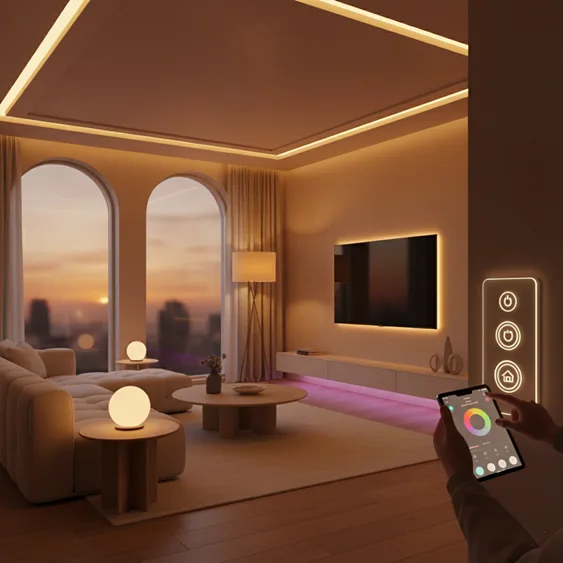
Remember when lighting your house was as simple as flipping a switch? On or off, bright or dim (if you have a dimmer). Those days are fast passing. Smart lighting systems provide more than just visibility, with a focus on ambiance, efficiency, security, and convenience. Consider a home in which your lights greet you upon entry, adjust to your mood with a simple voice command, and even repel unwanted visitors while you are away. This is not science fiction; it is the everyday reality for millions of Americans who are harnessing the power of smart lights.
In an increasingly networked world, our homes are becoming smarter, more interactive, and unexpectedly responsive to our demands. These innovative lighting solutions are some of the most powerful and fascinating inventions in the smart home movement. They are changing the way we interact with our living spaces, going beyond simple utility to provide a genuinely personalised and dynamic lighting experience.
This comprehensive guide is your illuminating journey into the world of smart lighting. We’ll cover everything, starting with the basics of how these systems function and moving on to the many advantages they bring, making your home life simpler and more pleasant. We’ll look at the various types of systems available, point out important features to consider, talk about what to think about when installing them, and help you find the smart lighting setup that’s just right for your home and budget. Get ready to discover the future of lighting and see how smart light systems can genuinely make your living space brighter and more convenient.
- What Are Smart Light Systems? Unpacking the Basics
- The Brilliance of Benefits: Why Go Smart?
- Types of Smart Light Systems: Finding Your Perfect Match
- Choosing Your Smart Lighting System: Key Considerations
- Getting Started: Installation & Setup
- Top Brands & Ecosystems: A Quick Look
- The Future is Bright: Evolving Smart Light Systems
- Conclusion: Transform Your Home with Effortless Lighting
What Are Smart Light Systems? Unpacking the Basics
Let’s start with the fundamental question: what exactly are we talking about when we say “smart light systems”? At its core, a smart light system refers to a network of interconnected lighting devices that you can control remotely and, often, automate. Think of it as giving your lights a brain and a voice, allowing them to do much more than turn on and off.
Unlike traditional lighting, which relies on physical switches and fixed brightness, smart lights integrate with your home’s existing network infrastructure. This typically involves your Wi-Fi, but you can also use other specialized protocols like Bluetooth, Zigbee, or Z-Wave. This connectivity is the secret sauce, enabling control via smartphone apps, seamless voice commands, or automated schedules you set yourself.
Imagine this scenario: you’re cozied up on the couch, ready for a movie. Instead of fumbling for a dimmer or getting up to turn off lamps, you say, “Alexa, dim the living room lights to 30% and turn on the TV backlighting.” Or you’re winding down for the night, and a soft, warm glow automatically fades in, while the bright overheads gently turn off. These aren’t just party tricks; they’re examples of the intuitive, effortless control that smart light systems bring to your daily life. They represent a significant leap forward in home automation, moving beyond basic functionality to offer a truly personalized and dynamic lighting experience.
How They Connect: The Tech Behind the Glow
Understanding the technology that allows these lights to “talk” to each other and to you is key to appreciating their versatility. While your experience is often seamless, there’s a fascinating interplay of hardware and software making it all happen.
- Smart Bulbs/Fixtures: These are the primary components, the actual light sources. But unlike traditional bulbs, they have tiny computers and radios embedded directly within them. They come in all the familiar forms—standard A19 bulbs, sleek LED strips, powerful floodlights, or even entire light fixtures with integrated smarts.
- Connectivity Protocols: This is the language your lights use to communicate.
- Wi-Fi: Many standalone smart bulbs connect directly to your home’s Wi-Fi network. It’s super convenient because it doesn’t require any extra hardware (like a hub). However, if you have a lot of smart devices, it can sometimes put a bit of a strain on your Wi-Fi bandwidth.
- Bluetooth: Great for smaller setups or controlling a single light in one room, Bluetooth offers a direct connection from your smartphone to the bulb. The catch? Its range is limited, so it’s not ideal for a whole-home smart lighting solution.
- Zigbee/Z-Wave/Thread: These are special “mesh networking” protocols designed specifically for smart home devices. They usually require a dedicated “hub” (sometimes called a bridge or gateway) that connects to your home router. The big advantage here is a super robust, reliable, and self-healing network with an extended range and lower power consumption. This makes them excellent choices for larger, more complex smart light systems. Thread is a newer, IP-based mesh protocol promising even better interoperability.
- Hubs/Bridges: For Zigbee, Z-Wave, or Thread systems, a central hub acts as the brain of your lighting network. It translates commands from your smartphone or voice assistant into signals that your lights understand and then relays those signals across the network. Popular examples include the Philips Hue Bridge, the SmartThings Hub, or even some Amazon Echo devices that have a built-in hub.
- Control Methods: Once connected, you have multiple ways to command your lights:
- Smartphone Apps: This is your primary control centre, offering granular control over individual bulbs, groups, scenes, and schedules.
- Voice Assistants: Seamless integration with Amazon Alexa, Google Assistant, or Apple HomeKit means you can speak your commands. “Hey Google, turn off all lights.”
- Smart Switches/Remotes: If you prefer a more traditional, tactile feel, many systems offer physical wall switches or portable remotes designed specifically to control your smart lights.
- Sensors: Truly hands-free automation! Motion sensors, occupancy sensors, and even daylight sensors can trigger your lights automatically based on movement, presence, or ambient light levels.
The Brilliance of Benefits: Why Go Smart?
The appeal of smart light systems extends far beyond mere convenience. They offer a multitude of advantages that enhance comfort, efficiency, security, and the overall aesthetic of your home, making everyday life simpler and more enjoyable.
A. Unrivalled Convenience & Control
This is often the first thing people rave about. Smart lighting liberates you from the tyranny of the light switch.
- Remote Access: Ever leave the house and wonder if you left the bathroom light on? With smart lights, that anxiety is gone. Check and control your lighting from anywhere in the world using your smartphone. Turn the lights on before you arrive home so you never walk into a dark house, or switch them off from the office if you forgot.
- Effortless Voice Commands: Imagine cooking with messy hands and needing more light. A simple “Alexa, brighten the kitchen lights” takes care of it. Voice control with Amazon Alexa, Google Assistant, or Apple HomeKit offers a hands-free, intuitive way to manage your lighting, proving incredibly useful in busy moments.
- Automated Schedules & Routines: This is where the “effortless” truly shines. Set your lights to gradually brighten in the morning, mimicking a natural sunrise to wake you gently. Have outdoor lights automatically illuminate at dusk and turn off at dawn. You can even set specific routines for different days of the week or seasons.
- Personalized “Scenes”: Tired of individually adjusting every light for different activities? Create custom lighting “scenes” for various moods or tasks. A “Movie Night” scene might dim the main lights, turn on accent lighting, and set the backlighting to a warm, inviting glow. A “Reading” scene could brighten a specific lamp to 100% cool white, while a “Party” scene cycles through vibrant colours.
B. Significant Energy Savings
While the initial investment in smart lights might seem higher, the energy efficiency and long-term savings are compelling.
- LED Efficiency: The vast majority of smart light systems utilize LED technology. LEDs are inherently more energy-efficient and incredibly long-lasting compared to traditional incandescent or even CFL bulbs, significantly reducing your electricity consumption and replacement costs.
- Precise Dimming Capabilities: Smart lights allow you to dim them precisely, often down to 1% brightness. This means you only use the exact amount of power you need, further reducing electricity consumption without sacrificing ambiance.
- Motion/Occupancy Sensors: Integrate with these sensors to ensure lights are only on when a room is occupied. No more leaving the basement light on all day because someone forgot to flip the switch! This eliminates wasted energy and contributes to a smaller carbon footprint.
- Longer Bulb Lifespan: Because LEDs last tens of thousands of hours, you’ll replace bulbs far less frequently, saving you money and hassle.
C. Enhanced Home Security
Smart lighting is an often-overlooked but incredibly effective tool for boosting your home’s security.
- “Vacation Mode”: Heading out of town? Program your lights to turn on and off randomly throughout the day and night. This effectively simulates occupancy, making your home look lived-in and deterring potential intruders who might be scouting for empty houses.
- Integration with Security Alerts: Some smart light systems can integrate with smart doorbells or security cameras. Imagine your outdoor lights flashing brightly if motion is detected in your yard late at night, or if a visitor rings your doorbell, providing an additional layer of awareness and deterrence.
- Emergency Lighting: In the rare event of a fire alarm or another emergency, smart lights can be programmed to flash rapidly or turn on brightly to attract attention from emergency services or to guide occupants safely out of the home.
D. Customizable Ambiance & Aesthetics
Beyond functionality, smart lights are powerful tools for interior design and mood creation.
- Tunable White Light: Many smart white bulbs allow you to seamlessly shift the “colour temperature” of your light, from a warm, cozy yellow (like a traditional incandescent bulb, around 2700K) to a bright, energizing cool white (like natural daylight, around 5000K). This adapts your lighting to different activities – warm for relaxing, cool for reading or working.
- Millions of Colour Options (RGB): For those who love creative expression, full RGB (Red, Green, Blue) smart bulbs can produce millions of colours. This opens up endless possibilities for holiday decorations, theme parties, mood lighting, or simply matching your decor and personal style.
- Dynamic Lighting Effects: Some systems offer incredible dynamic effects, such as lights that pulse and change colour to the beat of your music, or slowly shift through a spectrum of hues. These add a unique, captivating dimension to your home’s atmosphere.
E. Seamless Smart Home Integration
Smart light systems are often the perfect gateway drug to a broader smart home ecosystem. They play well with others!
- Interoperability: Good smart lights are designed to connect and communicate with a variety of other smart home devices, including smart thermostats, smart locks, automated blinds, and entertainment systems.
- Automated Routines: This is where the magic truly happens. Create complex routines where multiple devices act in concert. For example, when you unlock your front door with a smart lock, your smart lights turn on to a “welcome home” scene, your smart thermostat adjusts to your preferred temperature, and your favourite music starts playing on your smart speaker.
- Geofencing: Many systems can use your smartphone’s location to trigger actions automatically. Geofencing can turn your lights on as you enter a specific radius around your home and turn them off when you leave, ensuring you never waste energy or walk into a dark house again.
Types of Smart Light Systems: Finding Your Perfect Match
The market for smart lighting is incredibly diverse, offering solutions for every preference, budget, and technical comfort level. Understanding the main categories will help you navigate your options effectively.
A. Smart Bulbs
- Description: These are likely the most common entry points into smart lighting. They are individual bulbs (often LED) designed to screw directly into your existing light sockets, replacing traditional bulbs. They come in various shapes and sizes (A19, BR30, candelabra, etc.).
- Pros: Incredibly easy to install (screw them in!), relatively affordable for individual bulbs, and offer a wide variety of features, including white-only, tunable white, or full colour-changing capabilities, and dimmability.
- Cons: Can become quite expensive if you’re trying to replace every single bulb in a large house. A common challenge is that your traditional wall switches must remain “on” for the smart functionality to work, which sometimes requires a bit of user education for guests or other family members.
- Popular Brands: Philips Hue, Sengled, C by GE, LIFX, TP-Link Kasa, Wiz.
B. Smart Light Strips
- Description: These are flexible LED strips with an adhesive backing that can be cut to length and stuck to various surfaces. They’re often used for accent lighting, backlighting for TVs, under-cabinet lighting, or highlighting architectural features.
- Pros: Highly versatile for creative and indirect lighting, often offer full RGB colour control, impressive brightness, and dynamic effects. Their adhesive backing makes them easy to install in tricky or concealed spots.
- Cons: Not suitable for primary room illumination; they’re designed for ambiance and accent. It can be more expensive per foot compared to individual smart bulbs.
- Popular Brands: Philips Hue Lightstrip Plus, Govee, LIFX Lightstrip.
C. Smart Light Fixtures
- Description: These are entire light fixtures—think ceiling lights, pendant lights, track lighting, or outdoor floodlights—that have smart technology built directly into them. They’re not just a smart bulb in a dumb fixture; the intelligence is integrated into the fixture itself.
- Pros: Offers a more integrated and often aesthetically pleasing lighting solution for specific areas. They can be more robust and provide uniform lighting.
- Cons: Generally involve more complex installation (often requiring direct wiring to your home’s electrical system), making them less flexible once installed. They are typically more expensive than individual bulbs.
- Popular Brands: Lutron Caséta (some integrated offerings), Kichler (smart fixture lines), Philips Hue (also offers integrated fixtures).
D. Smart Switches & Dimmers
- Description: Instead of replacing your bulbs, these devices replace your existing wall switches. By installing a smart switch, you can control traditional (non-smart) bulbs in that circuit as if they were smart lights. They connect to your smart home system and allow for app or voice control of your existing “dumb” lighting.
- Pros: Keeps the familiar physical switch aesthetic while adding smart capabilities. This is an excellent solution for “smartening” existing recessed lighting or fixtures with many bulbs without having to buy dozens of smart bulbs. Also great for whole-room control.
- Cons: Requires basic electrical wiring knowledge for installation (or a professional electrician). They don’t offer individual bulb control or colour-changing capabilities for the traditional bulbs connected to them.
- Popular Brands: Lutron Caséta, Leviton Decora Smart, TP-Link Kasa Smart Wi-Fi Light Switch.
Choosing Your Smart Lighting System: Key Considerations
With such a diverse market, selecting the right smart light system can feel daunting. Here are the key features and factors to weigh when making your decision:
- Connectivity Method (Wi-Fi, Bluetooth, Zigbee, Z-Wave, Thread):
- Wi-Fi: Simplest setup, no hub needed, but can potentially crowd your network if you have many devices. Best for smaller, standalone setups.
- Bluetooth: Good for single devices or small, localized areas, but has a limited range.
- Zigbee/Z-Wave/Thread: Best for whole-home systems. These mesh networks are robust, reliable, and extend range by having devices relay signals. They typically require a central hub. If you’re planning a large-scale smart lighting deployment, this is often the way to go.
- Colour vs. White Spectrum:
- White Tunable: If you primarily want to adjust the brightness and warmth of your white light, this is perfect. It allows you to shift from warm, cozy yellows to bright, energizing cool whites, adapting to different activities or times of day.
- Full Colour (RGBW): For those who love creative lighting, parties, or want to match decor, RGBW bulbs offer millions of colours in addition to tunable whites.
- Warm White Only: The simplest and most affordable, but it provides the least flexibility.
- Brightness (Lumens): Don’t just look at wattage; look at lumens! This measures the actual light output. A good rule of thumb is that a 60-watt incandescent bulb equivalent is around 800 lumens. Ensure the bulbs are bright enough for your space’s purpose.
- Dimmability: Most smart bulbs are dimmable via their app, but it’s worth confirming this is a smooth feature without flickering or buzzing. The quality of dimming can vary between brands.
- Voice Assistant Compatibility: This is crucial for seamless “effortless lighting.” If you use Amazon Alexa, Google Assistant, or Apple HomeKit (Siri), double-check that your chosen system is explicitly compatible with your preferred voice assistant.
- Ecosystem Integration: Consider how well the lights will play with other smart home devices you already own or plan to purchase. Look for systems that support broader platforms like Apple HomeKit, Samsung SmartThings, or IFTTT (If This Then That) for advanced automation.
- Hub Required vs. Hub-Free: Decide if you prefer a system that connects directly to Wi-Fi (hub-free, often simpler for small setups) or one that uses a dedicated hub (potentially better performance and scalability for larger homes).
- Ease of Installation: While most smart bulbs are simple plug-and-play, smart switches and integrated fixtures require some level of electrical work. Be honest about your DIY comfort level.
- App Functionality and User Interface: A well-designed, intuitive app can make a huge difference in your daily user experience. Look for clear interfaces, easy scene creation, robust scheduling options, and custom automation capabilities. Read reviews on app stores!
Getting Started: Installation & Setup
One of the great things about smart light systems is how accessible they’ve become. Installation can range from incredibly simple to moderately complex, depending on your chosen system.
A. Smart Bulbs (Hub-Free Wi-Fi/Bluetooth):
- Process: This is as easy as screwing in a regular light bulb. Then, download the manufacturer’s app (e.g., Kasa, LIFX, Wiz), and follow the straightforward in-app instructions to connect the bulb to your home’s Wi-Fi network or pair it via Bluetooth.
- Considerations: Ensure your Wi-Fi signal is strong in all areas where you install bulbs. Remember, the traditional light switch for that fixture must always remain in the “on” position for the smart bulb to receive power and respond to commands.
B. Smart Bulbs (Hub-Based – e.g., Philips Hue):
- Process: First, connect the hub (like the Philips Hue Bridge) to your home router using an Ethernet cable. Download the system’s app (e.g., Philips Hue app) and let it discover the hub. Then, screw in each smart bulb in its desired location and use the app to search for and pair them with the hub.
- Considerations: Place the hub centrally in your home for optimal signal range. While a bit more setup, this hub-based approach provides a more stable, dedicated network for many devices, reducing strain on your Wi-Fi.
C. Smart Switches/Fixtures:
- Process: This is where you might need a little DIY confidence or a professional. You’ll first need to turn off the power to the specific circuit at your electrical breaker. Then, carefully remove the old switch or fixture and wire in the new smart device according to the manufacturer’s instructions. Once installed, turn the power back on and follow the app instructions to connect it to your smart home system.
- Considerations: If you’re not comfortable working with household electrical wiring, it’s always best (and safest!) to hire a qualified electrician. Always prioritize safety first.
Integrating with Voice Assistants:
Once your smart lights are successfully set up in their respective manufacturer apps (e.g., Philips Hue app, Kasa app), the next step for truly effortless control is linking them to your voice assistant of choice. You’ll typically do this within the Amazon Alexa app, Google Home app, or Apple Home app. This usually involves going to the “Skills,” “Works with Google,” or “HomeKit” sections, searching for your lighting brand, and authorizing the connection. After linking, you can often “discover devices” and assign them to specific rooms (e.g., “living room,” “kitchen”) for easier and more intuitive voice commands like, “Alexa, turn on the living room lights.”
Top Brands & Ecosystems: A Quick Look
The smart lighting market is bustling with innovation. Here are some of the most popular and reliable brands that US consumers frequently choose:
- Philips Hue: Often considered the premium option and a market leader, Philips Hue offers a vast range of high-quality bulbs, light strips, and integrated fixtures. It’s a hub-based (Zigbee) system, renowned for its reliability, extensive features, and excellent third-party integrations with virtually every major smart home platform.
- LIFX: A popular choice for those wanting vibrant colours and impressive brightness. LIFX bulbs are hub-free (Wi-Fi), making setup straightforward for individual lights, and they boast a fantastic app experience.
- Govee: Specializes in creative and entertainment lighting, particularly known for its affordable and feature-rich light strips, unique light panels, and TV backlighting solutions. Govee products are mostly Wi-Fi or Bluetooth-based.
- TP-Link Kasa Smart: Offers a variety of affordable Wi-Fi smart bulbs, plugs, and switches. Kasa is a great entry-level option for those looking for simple, reliable smart lighting without the need for a dedicated hub.
- Sengled: Provides a range of affordable Wi-Fi and Zigbee bulbs, often focusing on unique features like built-in speakers or security cameras within their lighting solutions.
- Lutron Caséta Wireless: While not primarily a “bulb” system, Caséta is a highly reliable and popular choice for smart dimmers and switches. It allows you to control traditional “dumb” bulbs smartly and integrates seamlessly with other smart home platforms. It uses its own proprietary Clear Connect RF technology, requiring a small hub.
- Wiz (by Signify, makers of Philips Hue): Offers an accessible range of Wi-Fi smart bulbs and fixtures. Wiz provides many of the popular smart features of Hue, including tunable whites and colours, at a lower price point and without requiring a separate hub.
The Future is Bright: Evolving Smart Light Systems
The evolution of smart light systems is relentless, driven by consumer demand for more seamless integration, intuitive controls, and advanced functionalities. We can anticipate even more exciting developments in the coming years:
- Adaptive Lighting: Imagine lights that automatically adjust their colour temperature and brightness throughout the day to precisely mimic natural light cycles, supporting your body’s circadian rhythms, improving sleep, and enhancing overall well-being.
- Even Deeper AI Integration: Expect more sophisticated artificial intelligence and learning algorithms that predict your lighting preferences based on your habits, time of day, seasonal changes, and even local weather patterns, offering truly proactive and personalized illumination.
- Matter Standard: The new Matter smart home standard is set to make a big difference. It aims to overcome existing compatibility issues between various brands and systems, allowing most smart devices to work together smoothly. This will create a more consistent, less complicated, and much easier experience for smart lighting for all users.
- Health and Wellness Focus: In the future, smart lighting could do more than just provide light. It might also help track sleep patterns, offer special light treatments to improve mood, or quietly watch over the environment to ensure better health and safety.
Conclusion: Transform Your Home with Effortless Lighting
Smart light systems are much more than just a passing tech trend—they are a key part of the modern smart home. They offer a great mix of convenience, energy savings, better security, and a strong sense of style. When you use smart lighting, you get complete, easy control over your surroundings, which changes the way you live and makes your everyday life better.
No more struggling in the dark, using too much energy, or dealing with lights that don’t adjust. Your home can become smart and responsive with just a touch or a voice command adapting to your needs and mood. Whether you start with just one smart bulb to see how it works or go all in with a full home upgrade, moving toward smart lighting is an investment in a more connected, personalized, and brighter lifestyle. Thanks to recent progress, these systems are now easier to use, more reliable, and more affordable than ever.
Now is the perfect time to bring smart lighting into your home and make your surroundings shine with intelligence. Explore the options, choose a system that fits your lifestyle, and prepare to be amazed by the transformative power of smart light systems. Welcome to effortless lighting; welcome to the future of your home.