
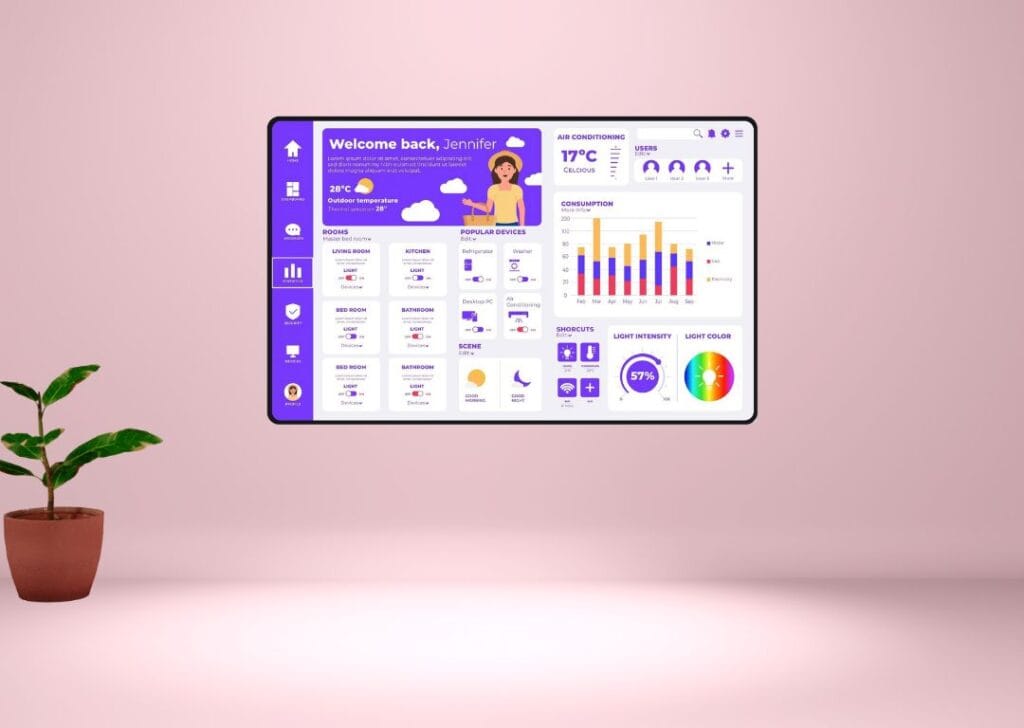
The smart home automation market has experienced a boom in recent years, with industry experts forecasting it would reach $73.7 billion in 2024 and increase at a CAGR of more than 13.7% between 2025 and 2034. Despite this amazing expansion, a lot of myths about home automation still exist, keeping homeowners from enjoying the true benefits of smart homes.
Whether you’re considering your first smart device or planning a comprehensive home automation system, it’s crucial to separate fact from fiction. In this comprehensive guide, we’ll remove the most common smart home myths and demonstrate the reality of modern home automation alternatives.
- Evaluating the Modern Home Automation.
- Myth #1: Home Automation Is Too Expensive for Average Homeowners
- Myth #3: Home Automation Compromises Privacy and Security
- Myth #5: Smart Homes Are Unreliable and Constantly Break Down
- Myth #6: Home Automation Will Make You Lazy and Dependent
- Myth #7: All Smart Devices Are Just Expensive Gimmicks
- Myth #8: You Must Replace Everything at Once
- Myth #9: Smart Home Technology Changes Too Quickly
- Myth #10: Smart Homes Don't Actually Save Energy
- The Future of Home Automation: 2025 and Beyond
- Getting Started with Confidence
- Conclusion
- Frequently Asked Questions (FAQs)
Evaluating the Modern Home Automation.
Before getting into specific myths, it’s important to understand how rapidly smart home technology has advanced. Today, automation systems differ fundamentally from the complicated and expensive solutions of the past.
Modern home automation uses powerful communication protocols, simple smartphone apps, and full integration capabilities to make smart homes easier to implement than ever.
Myth #1: Home Automation Is Too Expensive for Average Homeowners
The Reality of Smart Home Costs
The most common home automation myth is that smart homes are overpriced luxury products only for the wealthy. The misconception arises from outdated concepts of early automation systems, which needed complicated professional installation as well as high prices.
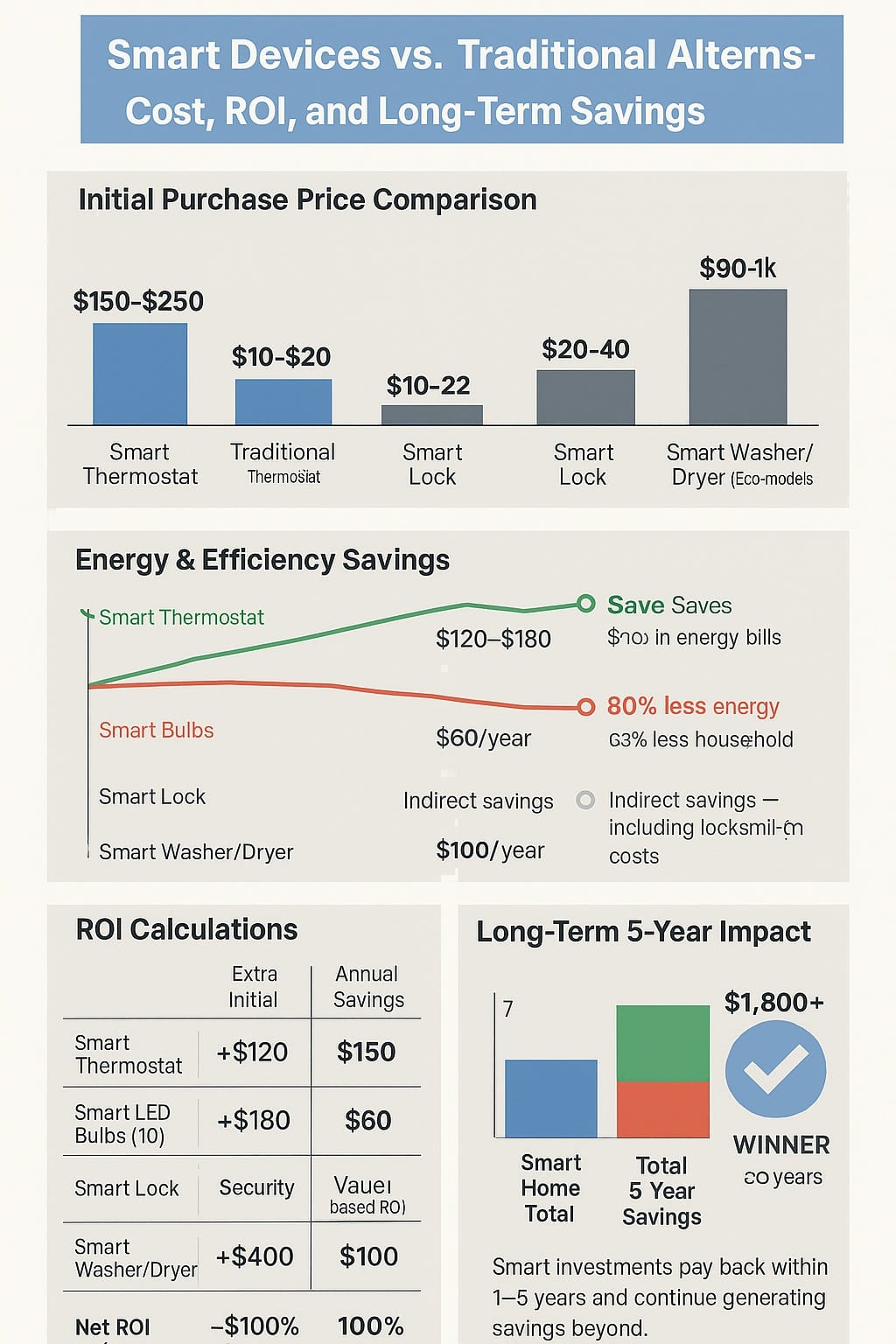
The truth: Smart home automation has become remarkably affordable, with entry-level devices starting under $50. It is not necessary to automate your entire house at the start of converting your conventional household to a smart home because most homeowners start with individual devices like smart lights, security cameras, or thermostats.
Cost Analysis
Let’s break down the costs of making your home smarter in a way that’s easy to understand.
Think of smart thermostats like a one-time investment in your comfort and your wallet. They usually cost somewhere between $150 and $300, but they can quickly pay for themselves by saving 10-15% off your energy bills.
When it comes to smart lighting, you can go a la carte. A single bulb might be as little as $15, but a more advanced one could be up to $50. You pick and choose what you need for each room.
For home security, you can get a lot of peace of mind for a reasonable price. Smart security cameras are priced from $100 to $300, and a smart door lock to keep your front door secure will likely run you $150 to $400.
To tie it all together, smart speakers and hubs are your command center, and they’re quite affordable, generally costing between $50 and $200.
And here’s the best part: the initial cost isn’t the whole story.
Many of these smart devices are so good at saving energy that they’re often eligible for energy rebates and tax credits, which can help bring down the price right away. The initial cost of investing in a home automation system can be alarming, but there is an important benefit to consider. You will not only save money on your monthly payments as time passes, but you may also receive unexpected financial assistance!
Myth #2: Smart Homes Are Too Complicated to Use
Don’t fall for the idea that smart homes are only for tech experts. The truth is, these systems are designed to be surprisingly simple for anyone to use. A vast majority of devices are either wireless or exemplify plug-and-play simplicity, making installation and operation straightforward for most homeowners.
The truth: Modern smart home technology prioritizes user experience through:
- Voice control integration with Amazon Alexa, Google Assistant, and Apple Siri
- Interactive smartphone apps that have a simple and icon-based interface.
- Automated scheduling that learns your preferences over time
- One-touch scenes that control multiple devices simultaneously
Real-World User Experience
Today’s home automation systems are designed for simplicity, not complexity. Most devices connect to your home’s Wi-Fi network within minutes, and smartphone apps guide users through setup with step-by-step instructions.
Voice commands like “Good morning” can simultaneously adjust your thermostat, turn on lights, start your coffee maker, and provide a weather update – all without touching a single switch or app.
Myth #3: Home Automation Compromises Privacy and Security
Many potential smart home adopters represent legitimate Privacy and Security concerns. Ignoring these security concerns may exaggerate risks while improving significant smart home security.
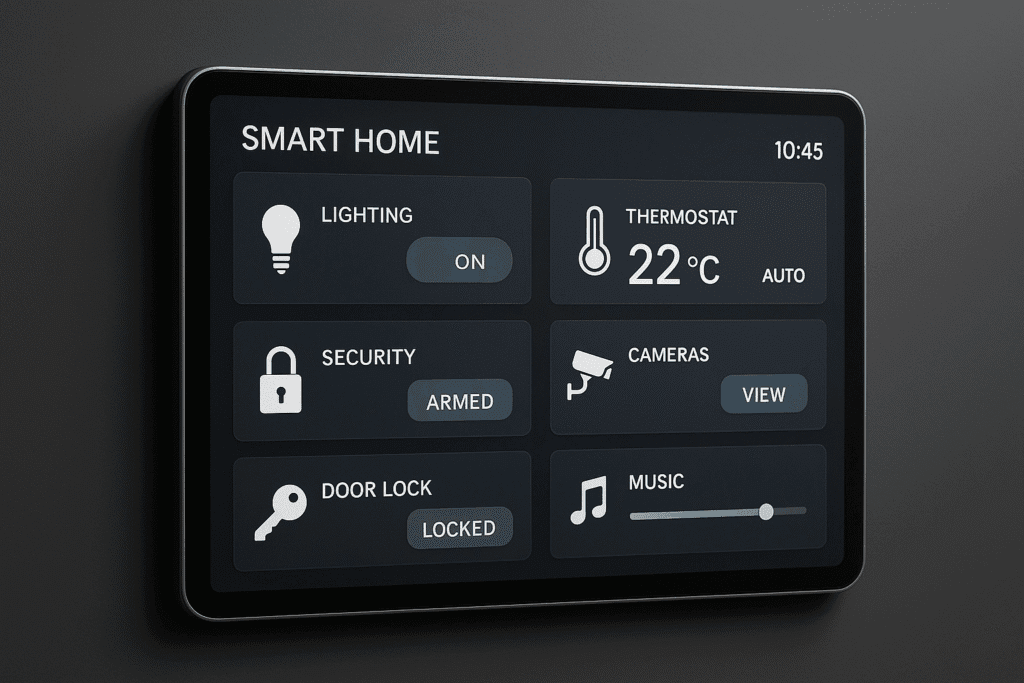
The truth: Properly implemented smart home automation typically enhances rather than compromises home security. After installing a modern smart security system 72% of the smart home users feel much safer.
Enhanced Security Features
Modern smart home devices incorporate multiple security layers:
- End-to-end encryption for data transmission
- Two-factor authentication for account access
- Local processing options that reduce cloud dependency
- Regular security updates from reputable manufacturers
- Network isolation capabilities through advanced routers
Smart security systems provide capabilities impossible with traditional alternatives, including real-time alerts, remote monitoring, automatic emergency contacts, and detailed activity logs.
DIY-Friendly Modern Systems
The belief that home automation requires expensive professional installation represents another outdated smart home misconception. While complex whole-home systems may benefit from professional design, most individual devices are explicitly designed for DIY installation.
The truth: Modern devices are entirely wireless, allowing for installation at any time and in an intuitive way. Most smart devices connect through standard electrical outlets or replace existing fixtures using the same type of connections.
When to Consider Professional Help
Professional installation is especially useful for:
- Whole-home integration projects that involve multiple systems
- Hardwired security systems with several sensors
- Advanced networking setups that require dedicated smart home hubs
- Custom programming for complex automation scenarios
However, using basic tools and following manufacturers’ instructions, individual devices like smart thermostats, door locks, lighting, and security cameras typically install in 30 minutes or less.
Myth #5: Smart Homes Are Unreliable and Constantly Break Down
Reliability in Modern Systems
Smart Homes being unreliable is often the result of the DIY approach, but this myth fails to account for dramatic improvements in device reliability and wireless technology stability.
The truth: Modern smart home automation devices are built with reliability as a primary concern. Most quality devices from established manufacturers offer:
- 99%+ uptime for core functionality
- The system keeps running even if the internet connection fails to connect due to local backup processing.
- Devices remain connected via redundant communication paths using mesh networking.
- Automatic updates help improve performance and fix potential issues.
- Professional monitoring options are also available for critical needs.
Building Reliable Systems
Reliability improves significantly when homeowners choose devices from reputable manufacturers, maintain strong Wi-Fi coverage throughout the home, keep their devices updated with the latest firmware, and design their systems with enough redundancy to protect essential functions.
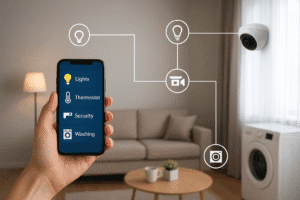
Myth #6: Home Automation Will Make You Lazy and Dependent
Automation vs. Dependency
Some critics suggest that smart home technology promotes laziness or creates unhealthy dependence on technology. This home automation myth misunderstands the primary benefits of automation systems.
The truth: Home automation is designed to eliminate repetitive tasks and improve quality of life, not replace human decision-making or physical activity.
Practical Benefits Include:
Smart homes save time by scheduling everyday tasks automatically. They additionally improve heating, cooling, and lighting efficiency, decreasing energy waste. Security has been enhanced by 24/7 monitoring and quick response to alarms. These devices offer useful accessibility functions that make life easier for families with elderly or disabled family members. Remote access adds peace of mind by allowing homeowners to check in on their property from anywhere.
Simultaneously, smart homes encourage a more aware relationship with the living area by providing clear insights into how energy is utilised, how security routines evolve, and how the system as a whole functions.
Myth #7: All Smart Devices Are Just Expensive Gimmicks
Practical Value vs. Novelty
A widespread myth about smart homes is that they represent nothing more than a short-lived fad. Although a few technologies are created mainly to spark curiosity, most of them provide clear, measurable benefits that make a difference in everyday living.
Energy Savings
- Smart thermostats typically reduce energy bills by 10-15%
- Smart lighting cuts electricity usage through automated scheduling
- Smart water heaters optimize heating cycles for maximum efficiency
Security Improvements
- 24/7 monitoring capabilities with traditional systems are impossible
- System failure or unusual activity management can be done using quick alerts
- You can check the home status while traveling with remote access
Convenience Benefits
- Voice control for hands-free operation
- Daily repetitive tasks are handled with automatic routines
- Remote troubleshooting for many system issues
Myth #8: You Must Replace Everything at Once
Gradual Implementation Strategy
Many homeowners disregard smart home automation because they think it involves replacing all existing devices at once. This smart home myth keeps users from getting additional benefits while spreading expenditures over time.
The truth: When you are beginning with high-impact devices and then extending based on experience and budget, it works best for home automation gradually.
Recommended Implementation Sequence:
- Start with smart thermostats for immediate energy savings
- Add smart lighting in frequently used areas
- Install smart security cameras at entry points
- Upgrade to smart door locks for keyless convenience
- Smart speakers are integrated for voice control
- Expand gradually to additional rooms and specialized devices
To avoid extensive complexity or upfront costs, learn each system thoroughly.
Myth #9: Smart Home Technology Changes Too Quickly
Standards and Compatibility
Some potential households are worried they will experience rapid technological change that will quickly obsolete their smart home system. This concern reflects valid historical patterns but misses current industry trends toward standardization.
The truth: The smart home industry has matured significantly, with major companies supporting:
- Matter and Thread protocols ensure universal device compatibility.
- Major manufacturers remain committed to backward compatibility
- long-term support policies extend the life of existing devices.
- Open protocols also help homeowners avoid being locked into a single vendor.
Future-Proofing Strategies
Choose devices that:
- Reliable smart devices support industry-standard protocols such as Wi-Fi, Zigbee, Z-Wave, and Matter.
- They come from established manufacturers that provide long-term support
- Offer regular firmware updates with feature improvements
- Work seamlessly across major platforms like Google, Amazon, and Apple.
Myth #10: Smart Homes Don’t Actually Save Energy
Energy Efficiency Reality
Despite energy efficiency being a primary selling point for smart home automation, some skeptics claim that smart devices actually increase energy consumption through constant connectivity and monitoring.
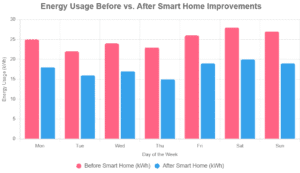
The truth: Properly configured smart home systems consistently reduce overall energy consumption through:
Optimization Technologies
Occupancy sensing automatically adjusts heating, cooling, and lighting as people move through the home.
Usage analytics highlight patterns of energy waste, and energy consumption demands shift to off-peak hours from peak demand hours. Integration capabilities ensure that multiple systems work together for maximum efficiency.
Measurable Savings
Studies consistently show that smart home technologies deliver real energy savings:
- Smart thermostats offer a 10-15% reduction in heating/cooling costs
- Smart lighting: use 20-30% less energy in lighting
- Smart appliances: improve operational efficiency by 10-20%
- Whole-home monitoring: through usage awareness 5-15% reduction can be achieved
The Future of Home Automation: 2025 and Beyond
Understanding today’s home automation myths helps homeowners prepare for how the technology will continue to evolve. Industry projections show that the smart home automation market is expected to grow from USD 92.8 billion in 2025 to USD 216.6 billion by 2035, driven by advances in AI, better interoperability, and rising consumer adoption.
Emerging Trends Include:
- AI-powered predictive automation gradually learns user preferences and begins to anticipate their needs over time.
- At the same time, enhanced voice recognition powered by natural language processing makes interactions with devices feel far more seamless.
- Advanced energy management connects with the grid and renewable sources for greater efficiency.
- Health and wellness are also supported through monitoring with environmental sensors and integration with wearable devices.
Making Informed Smart Home Decisions
Now that we’ve debunked these common home automation myths, you can make informed decisions about smart home technology based on facts rather than misconceptions.
Getting Started with Confidence
Begin your smart home journey by first identifying your main goals—whether it’s saving energy, improving security, adding convenience, or combining all three. Start small with one or two devices, take the time to understand their features, and then expand your system as you gain experience.
Remember that home automation should enhance your lifestyle, not complicate it. Choose reputable brands, prioritize devices that solve real problems, and don’t feel pressured to automate everything immediately.
Conclusion
The smart home automation industry has matured far beyond the expensive, complex systems that gave rise to many persistent home automation myths. Today’s technology delivers real value by enhancing security, improving energy efficiency, and adding everyday convenience—all at price points that are accessible to most homeowners.
By understanding the truth behind common smart home misconceptions, you can confidently explore home automation options that genuinely improve your quality of life. The key is starting with realistic expectations, choosing quality devices from reputable manufacturers, and implementing systems gradually based on your specific needs and preferences.
Whether your motivation is energy savings, stronger security, or greater convenience, smart home technology in 2025 provides proven solutions that deliver real-world benefits—well beyond the myths and misconceptions that might have kept you from moving forward.
Frequently Asked Questions (FAQs)
Q1: How much does basic home automation cost?
You can get started for as little as $50–100 with smart plugs, bulbs, or a thermostat. A typical starter setup covering lights, climate, and security usually costs $200–500.
Q2: Is it hard to install smart devices?
Not at all. Most devices are plug-and-play, with easy apps and voice control. Bigger systems may need a professional, but small setups are simple and quick.
Q3: Do devices work if the internet goes down?
Many core functions still work offline, though features like remote control need the internet. Some professional systems even have backup connections for critical functions.
Q4: Are smart homes secure?
Yes. Modern devices use encryption, two-factor login, and regular updates. Changing default passwords and keeping software updated adds extra protection.
Q5: Can I add smart devices to an older home?
Absolutely. Wireless devices, plug-in outlets, and battery sensors work in almost any home without rewiring or construction.
Q6: Will smart devices save money?
Yes, usually 10–15% on energy bills. Smart thermostats, lighting, and efficient appliances can save hundreds annually, plus long-term maintenance alerts help too.
Q7: What if the company goes out of business?
Choose trusted brands. Many devices still work locally, and compatibility with open standards ensures your system won’t be left stranded.
Q8: Can I control a smart home without a phone?
Yes. You can use voice assistants, switches, remotes, panels, or a computer—smart homes aren’t limited to just smartphones.