
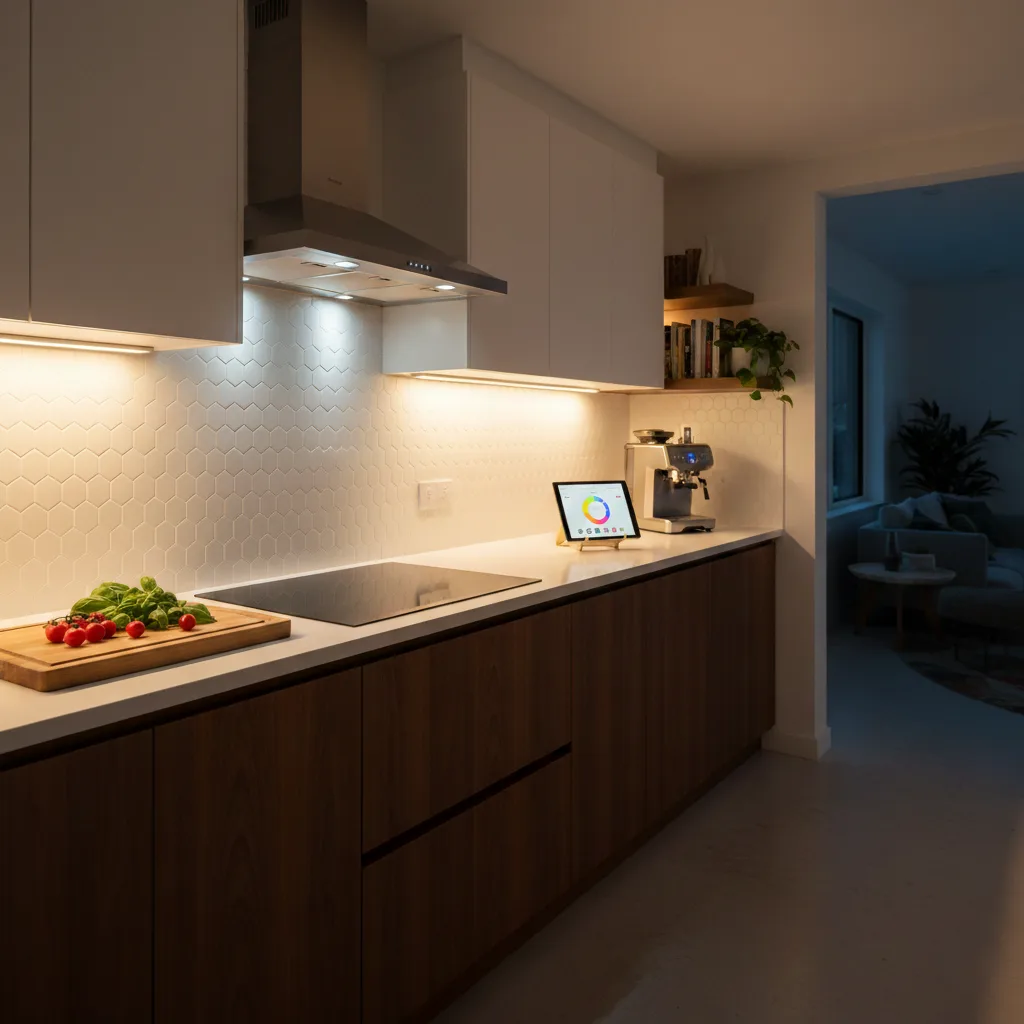
Is your kitchen still living in the dark ages? Seriously we’re talking about a location where you can cook, entertain, help with homework, and undoubtedly unwind with a bottle of wine after a hard day. If your primary source of light is a single, glaring overhead fixture that casts shadows precisely where you need to chop vegetables, you’re missing out on one of the smart home’s most impactful, but frequently neglected, updates. This isn’t just about putting a little glow under the cupboards; it’s about elevating your kitchen’s functionality, aesthetic, and automation to a level that feels almost futuristic.
We’re diving deep into the world of smart under cabinet lighting—a true game-changer. These systems aren’t just glorified LED strips; they are smart LED light bars and flexible tape lights that can integrate with your voice assistant, change color on a whim, dim automatically, and even turn on based on a schedule or motion. Forget fumbling for a switch. Imagine walking into your kitchen after a late-night movie and having a soft, warm path of light greet you without a single word or tap. That’s the dream, right?
For the tech-savvy homeowner, the smart home enthusiast, the renter seeking a high-impact, low-commitment upgrade, and the DIYer looking for the next weekend project, this comprehensive guide has your back. We’ll teach you how to select the best smart under cabinet lighting, which features are essential, and how to achieve a smooth, professional appearance without hiring a costly electrician. Let’s get lit!
- Essential Features of Under Cabinet Lighting
- Installation Showdown: Hardwired vs. Plug-and-Play for Every DIYer
- Top Picks: Reviewing the Best Smart Under Cabinet Lighting Systems
- Beyond the Kitchen: Maximizing Smart Lighting in Other Spaces
- The Nitty-Gritty: What to Look for Before You Buy
- FAQs
- Exclusive Summary: Your Smart Lighting Investment
Essential Features of Under Cabinet Lighting
When you’re wading through the sea of options, the term “smart” can feel a little… squishy. What does it truly mean for under-cabinet lights? It means moving past a simple on/off switch to a world of sophisticated controls and seamless integration into your life.
The Matter of Compatibility: Future-Proofing Your Purchase
Here’s a punchy note for you: Don’t get stuck in a single-brand silo (a.k.a. Vendor Lock-in Hell). The single most important trend in smart home tech right now is Matter.
Matter-compatible lighting is a big deal, and it’s what sets the next-generation lighting features apart. Think of Matter as the universal translator for your smart devices. If you choose a Matter-certified system—like some of the newer offerings from GE Cync or BLACK&DECKER—it means the lights will talk natively and easily to Apple HomeKit, Google Home, Amazon Alexa, and Samsung SmartThings simultaneously. You get unparalleled seamless integration without needing a different hub for every gadget. This isn’t just about convenience; it’s about future-proofing your investment, ensuring your new lights will still be best friends with whatever smart home hub you buy next year.
Tunable White (CCT) and Full RGB: More Than Just Brightness
A light bulb is a light bulb, right? Wrong. In a modern kitchen, your lighting needs change about four times a day. You need crisp, bright light for task work, and a warm, low glow for atmosphere.
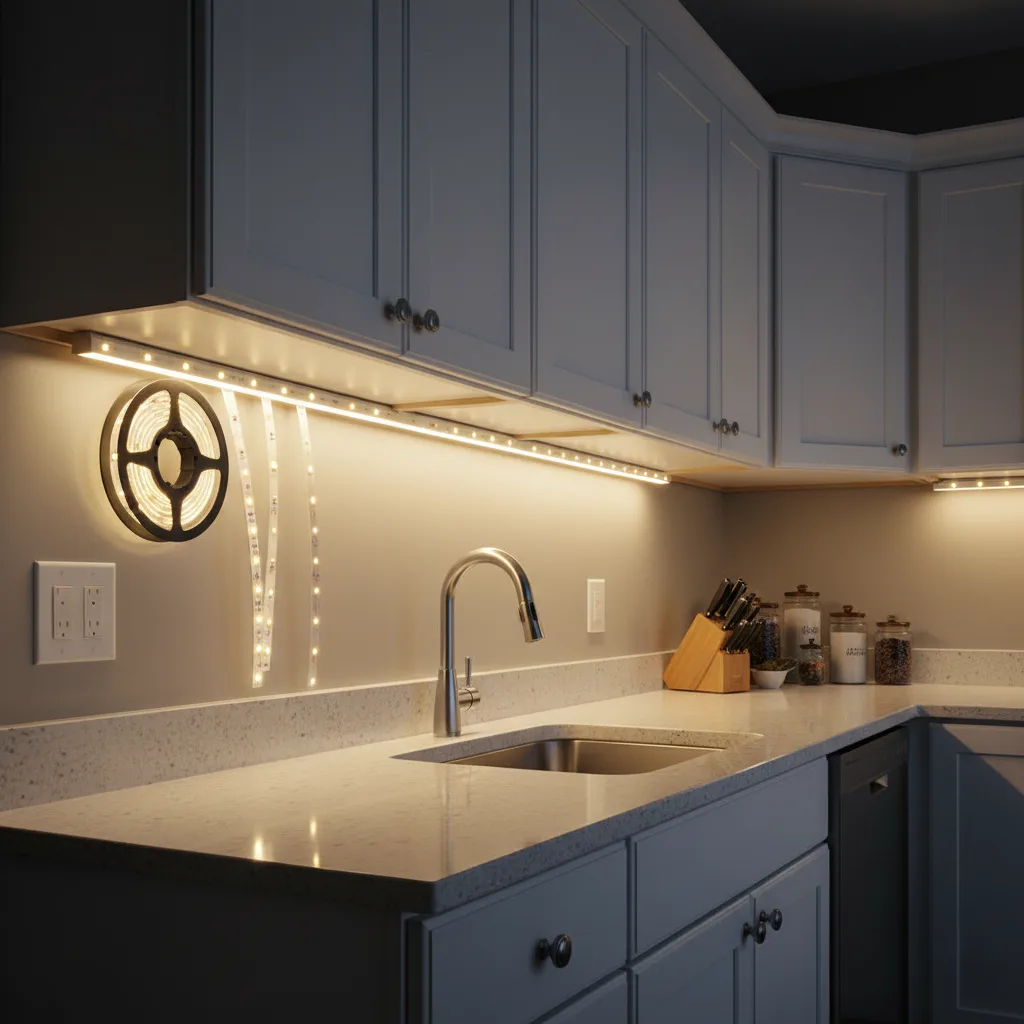
- Tunable White (CCT): This is your daily workhorse. Tunable white LED lighting lets you adjust the Color Temperature Control (CCT), typically from a warm white (around 2700K—think cozy candlelight) to a cool white (5000K+—think bright daylight). You’ll want the cool white when you’re doing detailed task lighting like reading a recipe or preparing a complicated meal, and the warm white for setting a relaxing evening mood. This is a non-negotiable feature for functional kitchen lighting.
- Full RGB: This is where the fun begins. RGB kitchen lighting offers up to 16 million color combinations. Do you need your kitchen counter to glow purple? Probably not every day. But for holiday parties, game-day gatherings, or simply creating a dramatic ambient mood lighting effect, the ability to splash a vibrant color adds a huge layer of personality and entertainment value. Philips Hue Lightstrips are legendary in this domain.
Control Freak Approved: Voice, App, and Physical Controls
You have to be a control freak when it comes to smart home automation. You want options.
- Voice Command: “Alexa, set counter lights to 50% warm white.” “Hey Google, turn on kitchen task lighting.” Voice control kitchen lighting offers true hands-free operation, which is invaluable when your hands are covered in flour or raw chicken (ew).
- App Control: This is where you program your routines, schedules, and custom lighting scenes. Most systems allow you to adjust the brightness and color from your smartphone, even when you’re not home.
- Physical Control: Yes, even smart lights need a simple on/off. Look for systems that support an auxiliary or wireless dimmer switch (like a smart button) that you can mount under the cabinet. Sometimes, you want to tap a button. Old habits die hard, after all. The IKEA SKYDRAG light strips, for instance, stand out because some versions feature a built-in motion sensor, eliminating the need for a dedicated light switch entirely.
Installation Showdown: Hardwired vs. Plug-and-Play for Every DIYer
The single biggest factor in choosing your system is the installation method. You have a few ways to skin this cat, and the “best” one depends entirely on whether you’re a renter who can’t drill a hole or a homeowner who wants a pristine, wired-in look.
The Renter’s Reality: Wireless and Rechargeable Wonders
If you’re a renter, you know the struggle is real. You want a massive aesthetic and functional upgrade, but you also need to be able to remove the whole setup before you move out, leaving the kitchen spotless—no holes, no permanent wiring. This is where renter-friendly lighting shines.
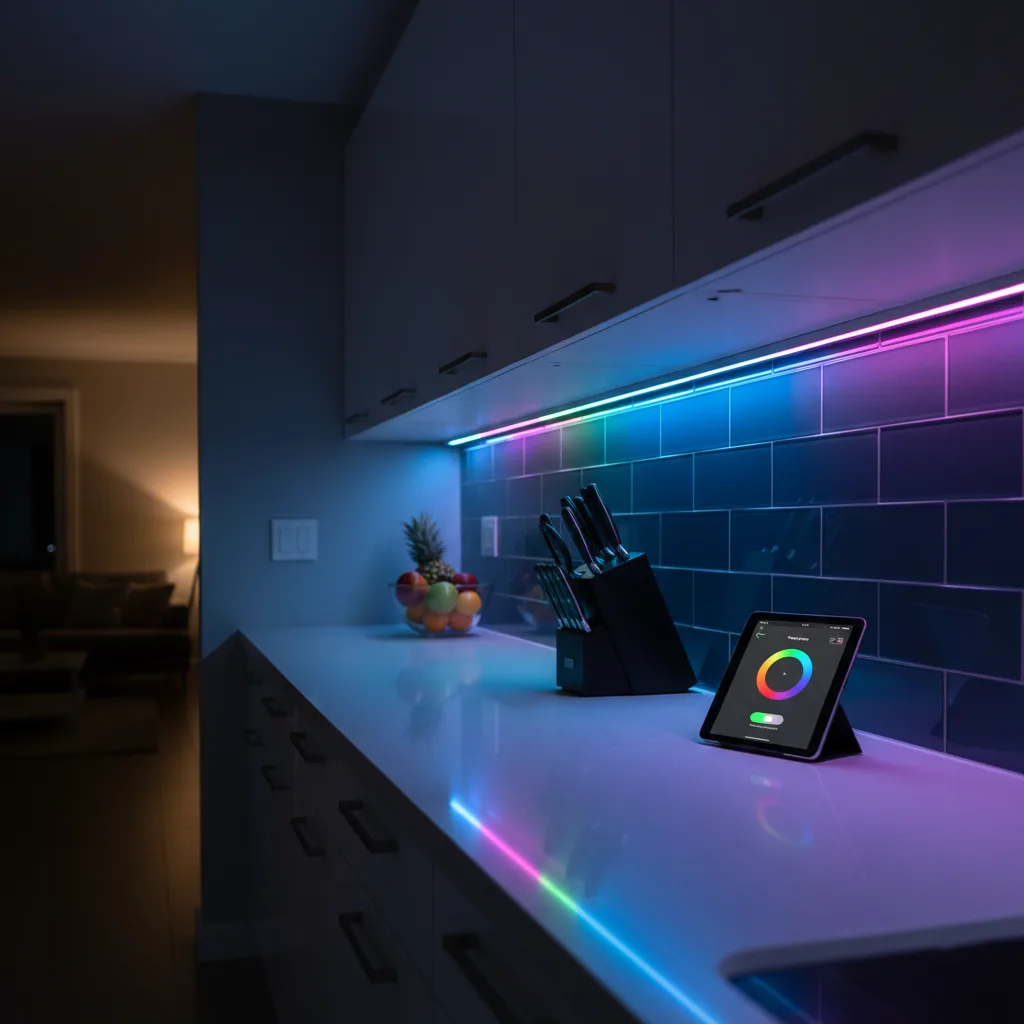
- Puck Lights and Light Bars: Systems like the Brilliant Evolution battery-operated puck lights or ultra-thin LED light bars are your go-to. They use adhesive mounting or magnetic strips. Seriously, no wires, no fuss. The magnetic backing on some rechargeable options (like certain LepoTec models) is a godsend; you can pull them down for a quick USB charge and stick them right back up in seconds.
- Plug-and-Play Strips: Even for non-battery options, plug-in LED strip kits are simple. Just adhere the strip, run the low-voltage wire along the cabinet seam, and plug the power adapter into an outlet (ideally one hidden inside a cabinet). This installation is quick, clean, and requires only a few minutes with a tape measure and a clean cloth.
The Homeowner’s Dream: Hardwired for a Seamless Look
For the homeowner, nothing beats a professional under cabinet install. This approach is all about making the lights look like they were custom-built into your home from the start.
- The Goal: A clean, cord-free look. This is achieved by running low-voltage wiring through the cabinet frame, behind the backsplash, or even inside the walls, then connecting it to a power supply box that is hidden from view (often mounted inside the top cabinet or pantry).
- The DIY Hardwire: This is more complex than plug-and-play, moving from a simple DIY under cabinet lighting project to something that might require a little more elbow grease—and maybe a consult with an electrician if you’re not comfortable with main voltage. The idea is to tap into an existing junction box or a switched outlet. Smart LED light bars (often linking together via jumpers) are ideal for this, as their power connections are more easily hidden within the fixture body.
- Pro Tip: If you’re a hard-core smart home enthusiast going the full DIY route with custom LED strip lighting, look for high-quality components: aluminum diffuser channels to eliminate the dreaded “dot effect,” 24V power supplies for long, consistent runs, and high-density strips (at least 60 LEDs per meter) for truly seamless light diffusion.
Top Picks: Reviewing the Best Smart Under Cabinet Lighting Systems
The market is flooded with options, but a few stand out from the pack for their smart features, quality of light, and reliability. Choosing the right one depends on your integration needs and your budget.
Philips Hue Lightstrip
When you talk about smart lighting, Philips Hue Lightstrips are usually the gold standard. They are known for being the most flexible option, offering a robust, best-in-class color range and highly reliable integration with every major smart home ecosystem (though often requiring the Hue Bridge for full functionality).
- Why it’s Great: The flexibility of the strip lets you easily wrap around corners. The light quality, color accuracy, and dimming are top-notch.
- The Caveat: They come with a higher price tag and often require their proprietary Hue Bridge for the smart home automation features, which is an extra step (and cost) that Wi-Fi-only solutions avoid. However, if you already have Hue bulbs in your home, this is a no-brainer.
GE Cync and BLACK&DECKER Smart Kit
These brands are cutting the cord, both literally and figuratively. They focus on Wi-Fi connectivity and the Matter standard to offer a direct link to your smart home hub without the need for an intermediary bridge.
- GE Cync Reveal HD & Smart Undercabinet Light Fixture: This is a fantastic option for those who want a light bar style—the more traditional fixture look—with modern smart features. It supports Matter, offers a mix of hardwire and plug-in installations, and features both millions of colors and tunable white options. The GE Cync smart LED light bars are a strong contender for a seamless install.
- BLACK&DECKER Smart Under Cabinet Lighting Kit: This is a complete kit with multiple light bars that link together, offering 16 million colors and adjustable CCT. It’s also Matter-compatible, making it simple for the tech-savvy buyer to integrate. The fact that the kits come with plenty of wiring that can be trimmed to length makes it very DIY-friendly.
High-Density LED Strip Kits (Full DIY)
If you’re an advanced DIYer who despises the “dots” of light you often see with standard strips, you need to go for a custom, component-based solution. This involves buying your LED strip, power supply, and controller separately.
- COB Lighting: COB (Chip on Board) lighting is the ultimate seamless light diffusion solution. These strips have so many tiny LEDs packed together that the light appears as a continuous, neon-like line. Paired with a slim aluminum channel—which also acts as a necessary heat sink—you get the cleanest, most professional look possible. This is the gold standard for smart home enthusiasts who view their lighting as a key design element.
Beyond the Kitchen: Maximizing Smart Lighting in Other Spaces
While the kitchen is the obvious candidate, smart under-shelf lighting can revolutionize other areas of your home. A true smart home owner thinks about automation everywhere.
Office and Workspace Automation
Staring at a computer screen all day is tough on the eyes. Glare and shadows from a single overhead light cause eye strain, which nobody needs. Installing smart LED light bars under your office shelving provides direct, non-glare illumination on your desk surface. You can program a “Focus Scene” where the light shifts to a bright, cool white (5000K) for maximum concentration, and then automatically shifts to a softer, warmer light in the late afternoon to support your circadian rhythm.
Hallways and Closets: Intelligent Night Guide Lighting
This is a classic home automation hack. Using a motion sensor integrated into or paired with your smart under cabinet lighting transforms your lower cabinets, bathroom vanities, or even hallway shelving into intelligent night guide lighting.
Instead of fumbling for a blinding switch during a midnight trek, the system detects your motion and activates the lights at a low-level, soft, warm glow (think 5-10% brightness). It’s just enough to see safely without disrupting your sleep cycle—a thoughtful, subtle use of smart technology that truly improves daily life.
The Nitty-Gritty: What to Look for Before You Buy
Choosing the best smart under cabinet lighting involves looking beyond the flash of the color-changing tech. Here’s a quick Under Cabinet Lighting Buyer’s Guide to ensure you make a smart, high-quality investment.
Lumens and CRI: The Light Quality You Deserve
Brightness is measured in lumens. For functional task lighting in a kitchen, don’t settle for less than 200 lumens per foot (or about 300 lumens per light bar/puck). Anything less is just decorative—fine for mood, but useless for chopping.
More importantly, look for a high CRI (Color Rendering Index). This number, which goes up to 100, measures how accurately the light reveals the true color of objects. A low CRI makes your food look dull and unappetizing. For a kitchen, you want a CRI close to 90 or above. This ensures your produce looks vibrant and your countertops maintain their true shade, which is key for accurate food preparation and a pleasing aesthetic.
Durable Design and IP Rating
The kitchen is a warzone of steam, grease, and the occasional spilled liquid. Your lights need to be tough.
- Heat Dissipation: LEDs create heat. For strips, an aluminum channel is necessary to dissipate this heat, which not only protects your cabinet but also significantly extends the longevity of your LED strip.
- IP Rating: This indicates the light’s resistance to water and dust. For under-cabinet use, particularly over a sink, look for a fixture with a decent IP rating (e.g., IP65) to handle splashes and steam.
Cost vs. Value: The Smart Investment
You will notice a price difference between a cheap, remote-controlled strip light and a Matter-certified smart LED light bar. The initial investment in quality—for a system like Philips Hue or a custom hardwired setup—is higher.
However, cheap lights often have poor color quality, flickering issues, require constant battery changes, or have unreliable connectivity. The money you save upfront will be spent later on replacements or just sheer frustration. A premium smart lighting system offers superior user experience, longevity, and energy efficiency, which is where the true value lies. Don’t be penny-wise and pound-foolish; buy quality once.
FAQs
Is hardwired or plug-in smart under cabinet lighting better?
Neither is universally “better”; it depends on your goal. Hardwired offers the most seamless install and a cleaner look since no wires are visible, which is ideal for homeowners. Plug-in or battery-operated options are faster, require minimal DIY expertise, and are renter-friendly, making them perfect for temporary or low-commitment upgrades.
What does “Matter-compatible” mean for my kitchen?
Matter-compatible lighting allows the fixtures to connect directly and consistently with all major smart home ecosystems (such as Alexa, HomeKit, and Google Assistant) without the need for a separate, proprietary bridge or hub. This provides seamless integration, makes setup easier, and future-proofs your purchase, preventing vendor lock-in.
How do I hide the wires for a clean look?
For hardwired setups, wires are typically hidden within the walls, the cabinet frame, or concealed by a light rail molding at the bottom of the cabinet. For plug-in smart LED light bars, use adhesive cable management channels that run along the back edge of the cabinet where they are least visible.
Are battery-powered lights smart enough?
Yes, for light-use areas like closets or for renters. Many battery-powered options now include motion sensors and can be controlled by a remote for dimming and scheduling, which satisfies most smart feature needs. However, for a high-use kitchen, a plug-in or hardwired system offers higher brightness and zero battery maintenance.
What is the ideal color temperature (CCT) for a kitchen?
The best kitchen lighting is tunable white lighting (CCT). Aim for a warm white (2700K-3000K) for a cozy, inviting atmosphere in the evenings, and a cool white (4000K-5000K) for bright, accurate task lighting when preparing food or cleaning. The ability to switch between both is key.
Can I install these myself, or do I need an electrician?
You can certainly install plug-and-play or battery-powered systems yourself. They are intended for simple DIY installation. Unless you have professional electrical experience, it is strongly advised that you consult a certified electrician for hardwired under cabinet lighting, which requires connection to your home’s main electrical wiring.
Exclusive Summary: Your Smart Lighting Investment
The era of basic kitchen lighting is over. Installing smart under cabinet lighting is one of the most cost-effective and functionally rewarding smart home upgrades you can make. It solves the genuine problem of poor counter illumination, adds a layer of stunning aesthetic appeal, and brings your daily routine into the world of seamless home automation. Whether you opt for a non-invasive, renter-friendly solution like a Brilliant Evolution light bar or go all-in with a hardwired, custom COB LED strip connected to Matter, the change will be immediate and transformative.
Stop settling for a dark, shadowy workspace. Start controlling the color, brightness, and schedule of your light with the sound of your voice. Choosing the best smart under cabinet lighting for your home is not just an expense; it’s an investment in a more functional, beautiful, and intelligently automated life.
Ready to see your kitchen in a whole new light? Don’t wait for your next kitchen remodel; start automating your counters today.