
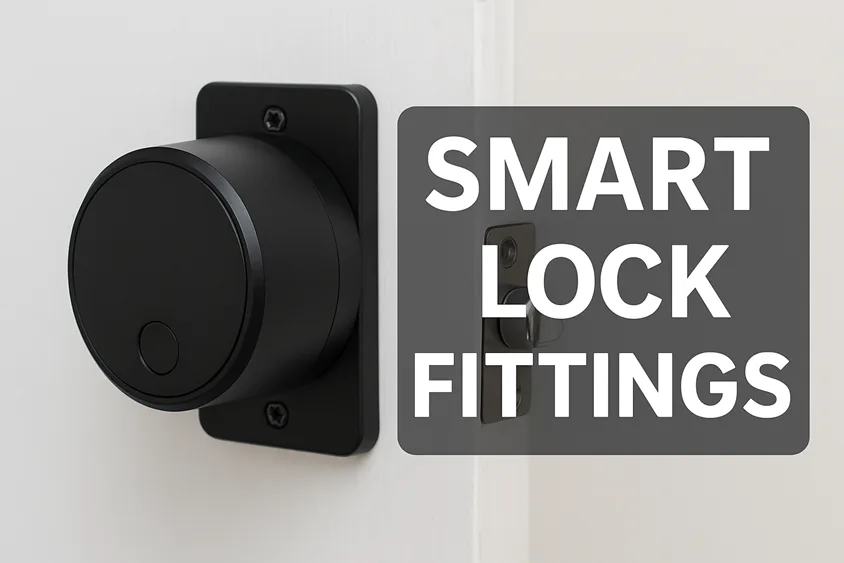
Installing a smart lock should feel like an upgrade rather than a scavenger quest. If you’ve reached the point where the new lock doesn’t match up with the old holes, or a trim plate is blocking the battery hatch, you’ll need clear, practical guidance. This guide walks you through smart lock fittings, explains how to choose the right mounting plate for smart lock, and shows when a smart lock adapter plate will save a project. Links and real-world tips are included so you can measure, order, and install with confidence.
- Why smart lock fittings matter
- Do you need a plate, adapter, or both?
- Types of smart lock fittings and why each exists
- How to choose the right mounting plate or adapter
- Step-by-step retrofit installation guide
- Common compatibility problems and fixes
- Product recommendations and real-world use cases
- Maintenance, safety checks, and seasonal tips
- FAQs
- Conclusion
Why smart lock fittings matter
Consider the lock body and the door to be two awkward dancers whose motions are directed by the choreographer. A poor fit turns a stylish, smart lock into a malfunctioning doorbell, resulting in binding bolts, dead batteries, or a voided guarantee. The proper smart lock fittings maintain security, preserve finish, and allow electrical components such as sensors and battery packs to rest and breathe properly.
Key points:
- Correct fittings protect the lock’s motor and battery compartment.
- They prevent mechanical wear and noisy operation.
- Proper reinforcement reduces forced-entry risk and complies with safety guidance like ANSI standards.
Do you need a plate, adapter, or both?
Measure first. If any of these apply, you’ll likely need a plate or adapter:
- Door thickness outside the lock’s supported range.
- Backset mismatch between lock and bore.
- Nonstandard rose or escutcheon with offset screw holes. If you answer “yes” to two or more, plan for both a mounting plate for smart lock and a smart lock adapter plate.
For a concise primer on backset and bore concepts, see the deadbolt entry at Wikipedia for visuals and definitions.
Types of smart lock fittings and why each exists
Every fitting solves a specific problem. Knowing them reduces returns and wasted hours.
Mounting plates for modern deadbolts
A mounting plate for smart lock is a metal or composite bracket that provides consistent screw patterns and a stable surface for the lock’s interior module. Most OEM kits include one, but aftermarket plates are useful when the door has wear, paint build-up, or nonstandard screw spacing. Choose stainless or zinc die-cast for strength.
Recommended reading: manufacturer installation manuals provide OEM dimensions and torque specs; always cross-check the product page before buying.
Adapter plates for legacy locks
A smart lock adapter plate converts older screw layouts to modern ones. They’re essential when retrofitting on an old rose, rim cylinder, or a decorative escutcheon. Adapters come slotted so installers can fine-tune alignment during a dry-fit.
Practical note: universal adapter plates with elongated slots reduce drilling errors and let you center the lock without filling old holes.
Backset extenders and spacer rings
When the face of the lock sits too close or too far from the door edge, a spacer or backset extender repositions the bolt mechanism for smooth travel. These small pieces keep the deadbolt travel centered and eliminate rubbing.
Strike plates and reinforced mounting kits
A reinforced strike plate distributes force into the studs, not just thin trim. Use 3-inch screws into the jamb and consider a metal reinforcement kit where security matters most.
Security reference: consult local building code resources and ANSI/BHMA guidelines to ensure your reinforcement approach is compliant.
Specialty fittings
No-drill plates, glass-door adapters, double-cylinder converters—these exist for edge cases. No-drill fixes trade permanence for convenience; use them only where code and security allow.
How to choose the right mounting plate or adapter
This is where most projects stall: uncertainty. Follow a simple flow and you’ll be fine.
Measure precisely
What to record:
- Door thickness at the knob and bore.
- Bore diameter and faceplate width.
- Backset measurement from the edge to the center of the bore.
- Center-to-center spacing of existing screw holes. Keep a tape measure and digital caliper handy for precision.
Note: uneven doors need repeat measurements at several heights. Use the largest thickness reading for fit decisions.
Match model to manufacturer guidance
OEM plates are safest. They ensure battery compartments and wiring channels are unobstructed. If using third-party kits, verify return policies and cross-reference the manufacturer’s spec sheet.
Material and finish
If the lock sits outdoors, choose corrosion-resistant alloys and finishes that match your hardware—powder-coated or stainless finishes last longer near coastal air.
Security and code compliance
Reinforced strikes and long screws are not optional for external doors. If the installation is for a rental property or a building subject to inspection, check local codes for acceptable deadbolt ratings and reinforcement measures.
Electrical clearance and battery access
Ensure the mounting solution leaves enough room for battery replacement without disassembly. For wired smart locks, verify the routing path is unobstructed; many adapters create tight channels that pinch cables.
Step-by-step retrofit installation guide
Here’s a hands-on sequence that minimizes trips to the hardware store.
Tools and prep
Collect: screwdriver set, drill with bits, chisel, measuring tape, masking tape, marker, torque driver, and a set of longer screws for jamb reinforcement. Power off the doorbell camera or connected hub if present.
Remove old hardware and inspect
Take photos. They’ll help with reassembly and will be useful if you need to explain issues to support. Inspect for rot or paint bulges; small surface rot requires repair before mounting.
Dry-fit the mounting plate for the smart lock
Place the plate, line up with the bore and existing screw holes, and mark any new holes. Use masking tape to hold the plate while you confirm alignment. If the plate needs a slight offset, elongated slots will allow adjustment without drilling new holes.
Fit extenders or spacers if needed
Install spacer rings to align the bolt’s travel. Test manually by sliding the bolt in and out several times. It must move smoothly over the entire travel range.
Secure the plate and mount the lock
Use long screws through the plate into the solid jamb or reinforced block. Avoid short screws that only bite paint and thin trim. If a screw begins to strip, back it out and use a slightly larger diameter screw rather than forcing it.
Install electronics and confirm clearance
Slide the interior module onto the plate carefully. Do not pinch cables; provide gentle curves in the wiring channel and avoid sharp bends. Insert batteries and test motorized lock action before tightening final screws.
Final tests
Operate the deadbolt manually and via the app. Pair to your hub and run an open/close cycle remotely. If binding occurs, loosen screws, realign, and re-tighten gradually.
Common compatibility problems and fixes
Few installs go flawlessly. Here’s how to salvage the usual snags.
- Misaligned screw holes: Use a universal smart lock adapter plate with slotted holes or fill and re-drill the old holes.
- Door thickness out of range: use spacer rings or extended thru-bolts for thicker doors. Thin doors may require a trim plate for safe screw engagement.
- Binding deadbolt: inspect backset, check for warped doors, and adjust strike plate location by chiseling a slightly shifted mortise.
- Blocked battery hatch: re-evaluate plate depth; some third-party plates cover battery doors—replace with OEM plate if necessary.
If the manufacturer denies warranty for a nonstandard fitting, document your steps and contact their support; many will authorize an exception if the installation followed their recommended fix.
Product recommendations and real-world use cases
For retrofits, universal adapter plates with slotted holes win on flexibility. For security-focused installs, choose hardened steel reinforcement kits paired with 3-inch screws. If you need the lowest invasion, look for verified no-drill plates—note these are appropriate only in low-risk, code-allowed scenarios.
Example product pages to consider:
- Schlage deadbolt product page for OEM specs.
- August smart lock retrofit solutions for conversion kits.
- Reinforced strike kits from major hardware suppliers for security reinforcement.
Always verify product compatibility on the lock manufacturer’s support pages before purchasing.
Maintenance, safety checks, and seasonal tips
A smart lock needs less daily attention than a mechanical lock, but periodic checks are essential:
- Monthly: confirm smooth operation and clean the bolt path.
- Annually: remove the interior cover and inspect battery contacts and wiring.
- Seasonal: doors expand in humidity; check strike alignment after summer and winter shifts. If the bolt suddenly becomes noisy or the motor strains, stop using the app command and test manually to avoid motor burnout.
FAQs
How do I measure backset for a smart lock retrofit?
Measure from the door edge to the center of the existing bore; common values are 2-3/8″ or 2-3/4″. If your number is in between, a backset extender may be required.
Will a third-party adapter plate void my smart lock warranty?
Some manufacturers restrict warranty for non-OEM components. Check the specific lock’s warranty terms on the manufacturer’s support page before installing a third-party smart lock adapter plate.
Can I fit a smart lock without changing the strike plate?
Often yes for like-for-like deadbolts. For enhanced security or if the bolt binds, upgrade to a reinforced strike plate and long screws.
What is the best fitting for a thin metal door?
Use a wide mounting plate for smart lock with long through-bolts on the interior side and a backing plate to spread the load and prevent screw pull-through.
How do I maintain battery life if the battery hatch is hard to access?
Relocate or replace the fitting so the battery compartment remains accessible; poorly placed plates frequently reduce battery life by trapping heat.
Conclusion
Choosing the correct smart lock fittings—the right mounting plate for the smart lock and an appropriate smart lock adapter plate—turns a promising gadget into a reliable upgrade. Measure carefully, prefer OEM guidance when available, and reinforce the strike for security. If you’re unsure after measuring, buy a universal adapter plate with slotted holes and a return-friendly policy.
Ready to make the switch?
Download a printable measurement checklist, compare OEM plates on your lock’s product page, and order a reinforced strike kit to complete the job. If this sounds like more than you want to tackle, call a certified installer to confirm fit and protect the warranty—security is too important to leave to chance.