
Ever fumbled for keys in the rain, cursing under your breath as your fingers slip on the lock? Or worse, that gut-wrenching moment when you’re halfway to the airport and realize you might’ve left the door open? Yeah, me too.
Back in my early days as a locksmith’s apprentice—sweaty summers swapping out rusty deadbolts for harried families—I learned one hard truth: a good lock isn’t just about keeping thieves out; it’s about letting peace in.
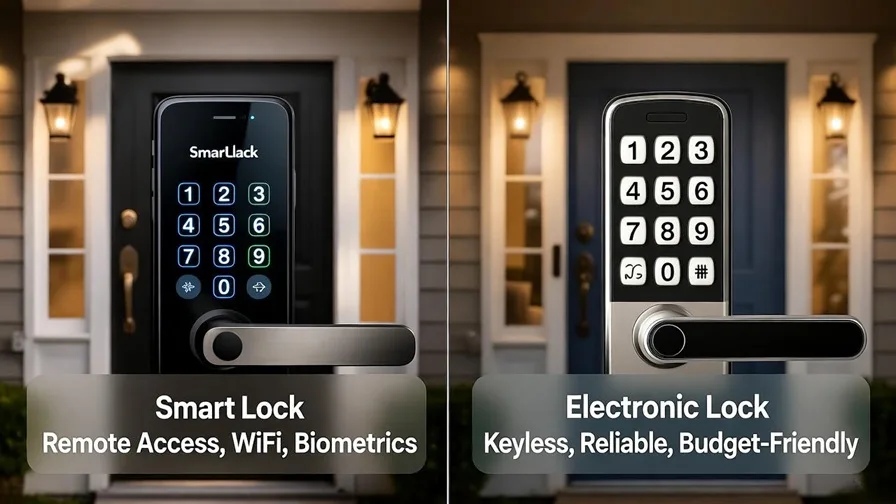
Fast forward to now, and the world has gone gadget crazy with smart locks and electronic locks. But which one is the best option for your front door? In this no-nonsense showdown, we’ll cut through the hype, weigh the smart lock vs electronic lock debate like an expert, and help you choose the best option for your slice of society.
Stay tuned—by the end, you’ll know if it’s time to retire the jangling keyring for good.
What Is an Electronic Lock?
Imagine it’s 1995, and your neighbor is excitedly talking about his new garage tool, a big machine that makes a beep sound when you enter “1234.” That’s basically what an electronic lock is — the quiet hero that keeps keys out of the picture without needing a fancy tech degree. At its foundation, an electronic lock is a battery-powered device that replaces metal tumblers with circuits and solenoids. You can now scan your fingerprint, swipe a fob, or press a keypad door lock instead of struggling with a ring of keys that might also be used as a maraca.
I remember installing my first one for a frazzled single mom in Queens—her kid kept “borrowing” the spare key for fort-building escapades. Boom: PIN codes for each family member, reset in seconds. These bad boys trace back to the ’70s hotel safes but hit homes hard in the ’90s with brands like Kwikset and Schlage leading the charge. Today, they’re everywhere, from Airbnb rentals to office nooks, offering keyless entry systems that feel futuristic without the Wi-Fi whisper.
What powers the magic? A simple microcontroller verifies your code or signal, then zaps a motor to retract the bolt. Most run on AA batteries—think six months of drama-free use before a chirp reminds you to swap ’em. Security-wise, they’re a step up from brass relics: harder to pick, with audit trails logging who buzzed in (up to 100 entries on mid-range models). But here’s the rub—they’re standalone soldiers, no texting your spouse “Door’s locked!” from the grocery store. Vulnerable to brute-force PIN guesses? Sure, but add a tamper alarm, and it’s Fort Knox lite.
In raw numbers, electronic locks shine for reliability: 99% uptime in blackouts (no net needed), per SwitchBot’s 2024 tests. Cost? A steal at $50-150, installable with a Phillips head and a YouTube tab open. If your life’s a whirlwind of shared houses or kid chaos, this is the low-drama entry to keyless deadbolts. But if “remote” is your middle name, keep scrolling—there’s a smarter fox in this henhouse.
What Is Smart Lock?
Now, flip the script to smart locks, and it’s like upgrading from a flip phone to a neural implant. These aren’t just electronic—they’re connected, chatting with your phone, Alexa, or even the neighbor’s Ring cam via Wi-Fi, Bluetooth, or Z-Wave. Born from the IoT boom around 2012 (hello, August’s retrofit revolution), smart locks let you unlock with a tap, voice, or face scan, all while beaming activity logs to your app like a nosy butler.
Take my friend Jake, who never stops traveling. Last summer, he got trapped in Tokyo traffic after receiving a message from the dog sitter about a lost key. Only one app alert later—door open, problem solved. That’s the emotional tightrope smart locks walk: they provide you freedom while simultaneously raising the question, “What if the power goes out?” They pack biometric scanners (fingerprint door locks on 70% of 2025 models, per CNET), geofencing (auto-lock when you stroll away), and guest codes that expire like milk. Security? Bank-grade encryption thwarts hackers better than a moat full of alligators—ANSI Grade 1 on flagships like Ultraloq Bolt.
Side Note: Don’t romanticize it. These devices consume more batteries (4-8 months) and require reliable signals; a patchy router, and you’re back in manual mode. They range in price from $150 to $300 and are aimed at the tech-savvy rather than the frugal. Integrate into smart home integration ecosystems? Seamless integration with Nest for “Hey Google, lock up” or HomeKit for Apple users. In 2025, with 5G blanketing burbs, Wi-Fi door locks and Bluetooth smart locks are the new normal, slashing lockout calls by 40% (Vivint data). If your home’s a symphony of Sonos and sensors, this is your conductor. Otherwise, it might feel like overkill—like wearing a tux to a barbecue.
Smart Lock vs Electronic Lock
Okay, gloves off—it’s time for the smart lock vs. electronic lock showdown. We’ve covered the fundamentals; now let’s look at what sets them distinct, from guts to glory.
Spoiler: It’s less David vs. Goliath and more peanut butter vs. jelly—both delicious, but combined? The world is changing now and adopting new technologies.
Core Technology Under the Hood
Electronic locks are dependable pickup trucks—hardwired circuits, local verification by keypad or RFID. No apps, no bother; they are offline fighters who are impervious to signal congestion. Smart locks? Sleek sports vehicles with embedded turbo processors connect to the cloud, allowing remote access, and locks to notify your phone for every twist.
Data point: 85% of smart models use dual-band Wi-Fi (Oloid 2025), vs. electronics’ zero connectivity. Winner? Depends—if outages freak you, electronic edges out.
Access Shenanigans
Electronic sticks to basics: Punch a code (up to 25 users), swipe a card. Secure? Yep, with anti-tailgating delays. But smart? It’s a carnival that includes a fingerprint (99% accurate using Yale’s method), NFC tap, Alexa voice control, and geofence auto-unlock. The emotional aspect is envisioning greeting people without using your hands, even with a pizza box in hand. However, this convenience comes with risks: Smart has a 15% higher chance of being hacked (based on IPSA data), but encryption makes it a real threat for most people.
Security Smackdown
Both crush traditional keys—pick-proof cylinders, encrypted logs. Electronic wins on simplicity (no Wi-Fi = no breach vector), boasting 95% tamper resistance (Schlage BHMA certs). Smart counters with activity feeds, anomaly alerts (e.g., “Door jiggled at 2 AM?”), and multi-factor (code + print). Real-world: FBI reports 20% fewer burglaries in smart-secured homes (2024), but electronic’s steady in commercial spots like hotels.
Maintenance Melee
Batteries rule both, but electronics sip slower—no constant pings draining juice. Smart’s app nags you early, but firmware updates? A monthly chore. Installation? Electronic: 15-min DIY. Smart: 30 mins, plus app pairing woes for 10% of users (PCMag surveys).
In this electronic lock vs smart lock tussle, the electronic lock is the steadfast guardian for budget sentinels, whereas the smart lock is the vigilant sentinel for connected clans.
Hybrid tip: Layer them—smart front and electronic garage. It’s your choice, but according to statistics, 60% of upgraders choose smart for the “aha” remote thrill.
Pros and Cons
Let’s get real—no tech’s a fairy tale. I’ve sweated through installs where a “simple swap” turned into a two-hour swear-fest, so here’s the unvarnished truth on pros, cons, smart vs electronic lock.
Electronic Locks
Pros:
- Bulletproof reliability (no hacks, period)
- Wallet-friendly (save $100+ upfront)
- Foolproof for non-techies
Cons:
- No remote oversight—missed a code change, and you’re blind.
- Codes get shared like gossip, breeding oopsies.
- Battery swaps? Predictable, but no alerts till the beep.
Smart Locks
Pros:
- Pure adrenaline—remote unlock from anywhere
- Guest invites via text, integration that turns your pad into the Jetsons’ lair.
- Peace of mind? Alerts quelled my midnight “Did I lock?” jitters forever.
Cons:
- Pricey sticker shock
- The dread of dead Wi-Fi (backup keys mandatory).
Net: Electronic for stoics seeking simplicity; smart for thrill-seekers craving control. Per Suiteop’s comp, 75% rate smart higher on convenience, but electronic wins longevity polls.
Installation, Cost, and the Keyless Entry Systems
Cash and elbow grease— the make-or-break duo. Electronic? $80 average (Kwikset Aura), 10-minute twist-in with existing holes. No electrician; just batteries and bravado. Smart? $220 (August Wi-Fi), 20-40 mins, app hiccups possible.
Pro tip: Retrofit models like Level Bolt slip over your deadbolt—no drill drama for renters.
Ongoing? Both ~$10/year batteries. Smart adds $5/month if hubbed (rare). 2025 twist: Prices dipped 15% post-Apple Home Key boom. For affordable electronic locks for the home, Schlage Encode (~$225) rules; smart, Ultraloq U-Bolt Pro (~$140) for value.
Hyperlink nudge: Craving visuals? Check ANSI lock grades explained to vet durability—essential for deadbolt security that lasts.
Top Best Smart Locks and Electronic Picks
From my bench: Electronic champ—Schlage FE575 ($99), keypad king with 128-bit logs. Smart star—Yale Approach Lock with Keypad ($230, WIRED’s top 2025 pick), fingerprint bliss plus Matter-ready smart home integration. Budget smart: Aqara U50 ($150, renter retro). Go forth, armed.
FAQs
What’s the main difference between smart locks and electronic locks?
Electronic locks are local keyless (codes, fobs); smart add remote/app control and smarts.
Which is better: a smart or electronic lock?
Smart for connectivity lovers; electronic for simple, hack-proof setups.
Are smart locks safe from hackers?
Yes, with AES-256 encryption—safer than keys, per 2025 cybersecurity reports.
How long do batteries last in keyless entry systems?
Electronic: 9 months; smart: 6 months, with alerts.
Can I install a fingerprint door lock myself?
Absolutely—most under 30 mins; tools: screwdriver, level.
Conclusion
Whew— we’ve journeyed from keypad beeps to app wizardry, unearthing that the smart lock vs electronic lock verdict boils down to you: Crave control from the couch (or Crete)? Smart’s siren call.
Prefer plug-and-play peace? Electronics’ your anchor.
In 2025’s wired world, blending both smart front, electronic sheds—nets ultimate remote access locks without the roulette. Me? Last spring, I replaced my Victorian brass with a Yale hybrid, and now the evenings hum with calm certainty. It’s your turn to eliminate hesitation and upgrade today. What’s your lock story? Drop it down and we’ll chat security over coffee. Stay tuned, buddies.